
The State of Vibe Coding in 2025: Not a Shortcut. A Shift.
Nov 11, 2025
6 min Read
Introduction: The Rise of Vibe Coding
In 2023, Karpathy called it “vibe-based development”, a poetic nod to a coding experience led not by syntax, but by intention. Fast-forward to 2025, and the joke isn’t funny anymore: it’s real. Developers, founders, marketers, and even non-technical operators are now building functional applications by describing their goals, not their methods.
This is vibe coding: a shift in development culture where human intent becomes the blueprint, and AI becomes the contractor. It’s not just faster, it’s cognitive offloading at scale. From spinning up dashboards in Web2 to deploying smart contracts in Web3, the stack itself is evolving into an intelligent co-pilot.
But is this shift sustainable? Are we empowering new builders or trading autonomy for abstraction? This blog critically explores the state of vibe coding in 2025, what it enables, where it fails, and how we move forward with clarity, not just speed.
What is Vibe Coding?
Vibe coding isn’t a rebranding of no-code. It’s not drag-and-drop. It’s not just a wrapper around ChatGPT.
“The term 'vibe coding' was famously coined by @karpathy, capturing a shift from syntax-focused to intent-driven programming.
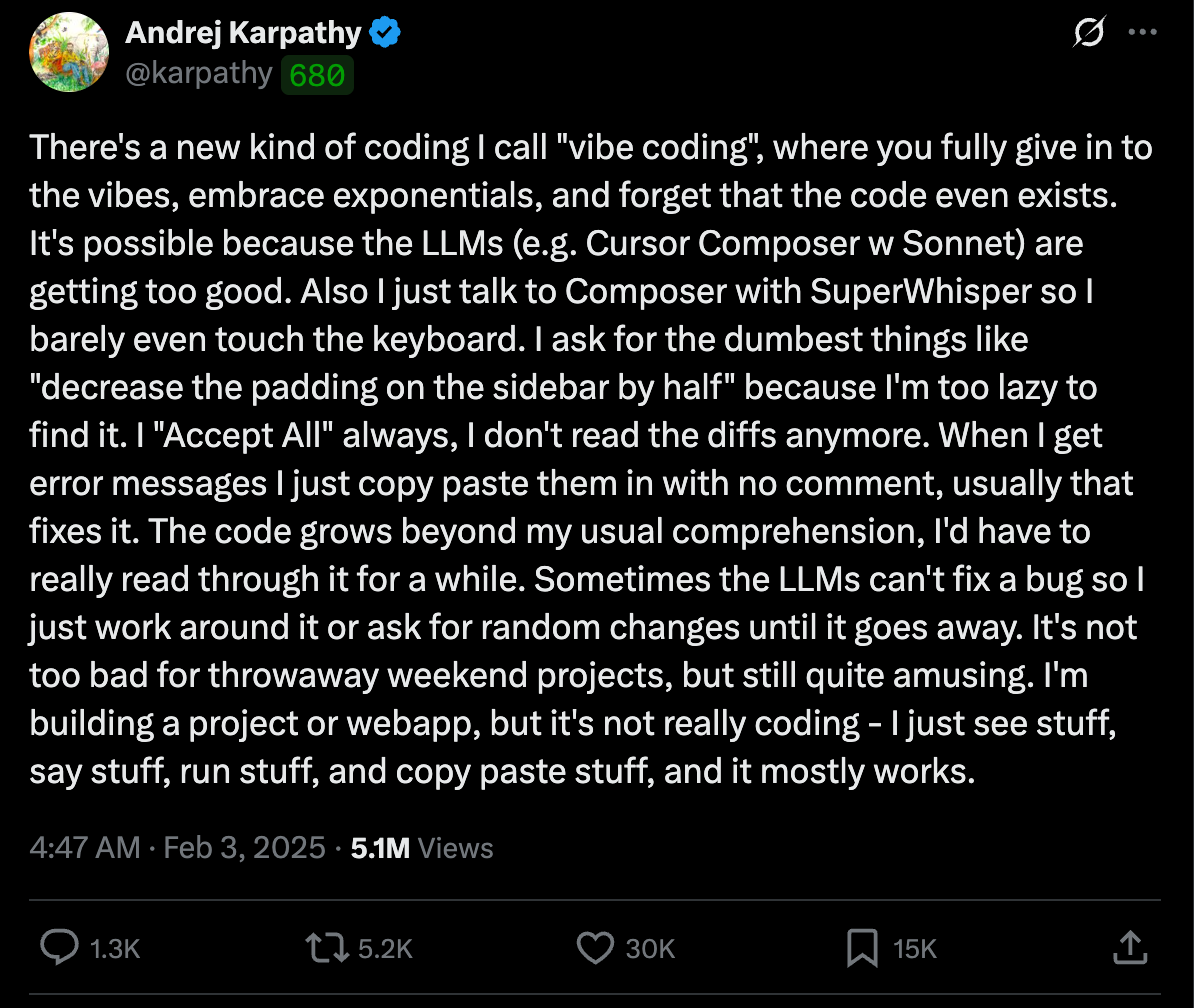
It’s a new development stack built around prompted intent, where the developer (or operator) outlines what they want, not how to write it, and lets an LLM scaffold the implementation. Unlike low-code tools, vibe coding assumes the AI knows how to code, and the human knows what outcome they’re aiming for.
Karpathy’s 2023 meme has matured into a method: "Don’t write code, just vibe."
Across platforms, the ethos remains the same: move from typing to thinking, from GitHub commits to high-level orchestration.
IBM calls this "prompt engineering for systems-level automation." Google’s internal workflows now treat prompt history as a form of version control. In essence, vibe coding transforms coding into conversational architecture, collaborative, adaptive, and reflexive.
The Evolution of Vibe Coding (2023 - 2025)
The roots of vibe coding were planted when GitHub Copilot and ChatGPT first showed us the possibilities of AI-assisted dev. But it wasn’t until 2024-25 that we saw structured workflows emerge:
2023:
GitHub Copilot exploded. ChatGPT 4 entered mainstream workflows.
Early-stage devs began to ship MVPs solo using LLMs.
Prompting was still artisanal, messy, and opaque.
2024:
Claude 2 introduced markdown-based prompting (spec.md, context.md, test.md) that gave rise to structured workflows.
Reddit threads shared “plan > prompt > test > refactor” loops.
Replit released live-coding AI agents. AI wasn’t a shortcut, it became the stack.
2025:
AI devs now coordinate multiple agents: planner, implementer, QA, refactorer.
We’re seeing “modular prompting” and agent memories stored as digital blueprints.
From Vercel to Supabase, infra is now LLM-native. The dev stack is evolving around human cognition, not human syntax.
Most importantly, communities started converging on a repeatable process:
Plan → Prompt → Build → Refactor → Test → Repeat
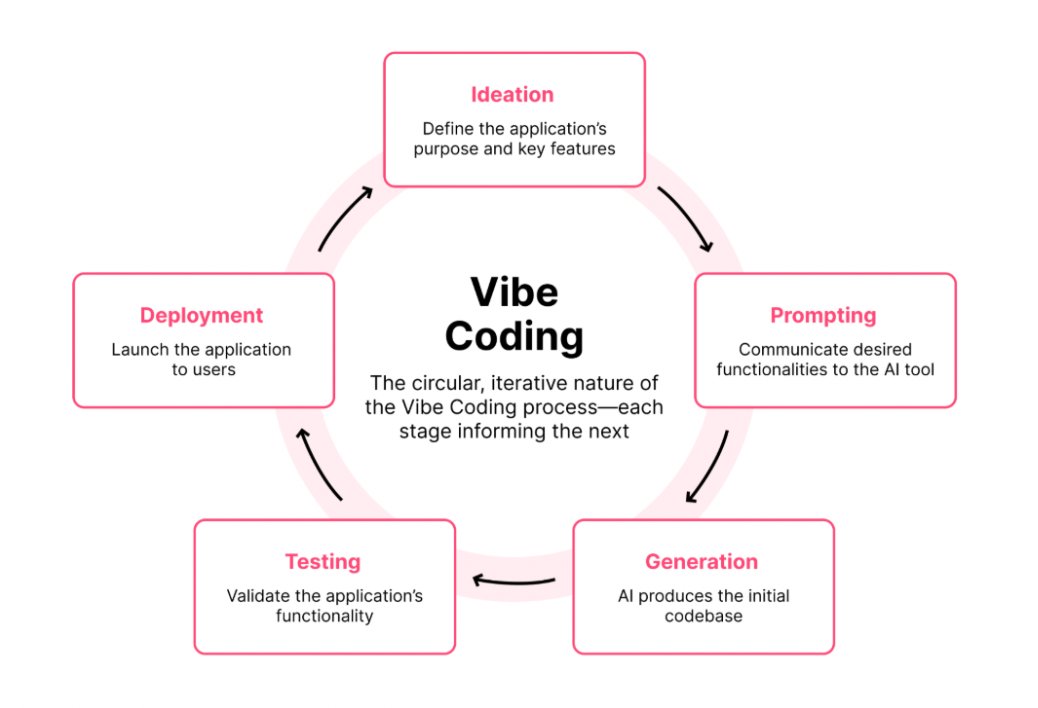
This loop isn’t rigid, but it is consistent across high-performing devs. Prompts now carry structure (e.g., claude.md, spec.md, qa.md), and teams use AI agents in tandem.
The Web2 Vibe Coding Stack
Vibe coding in Web2 is a mix of open tools, smart defaults, and zero-config hosting. Here's the go-to stack in 2025:
- Frontend & UI:
- ShadCN for components + Tailwind themes + Claude/ChatGPT for layout reasoning.
- You design with prompts like “make it look like Notion meets Linear.”
Backend & Auth:
- Supabase as backend-as-a-vibe: just describe your schema, and you get a working DB + API + Auth + Edge Functions.
- AnanasAI (Claude wrapper) lets you sync UI prompts with Supabase in real time.
Dev Agents:
- Claude Code, Codex (UI-heavy prompts), and open-source tools like SmolDev, Devika, and OpenDevin.
- Tools like Cursor and Continue.dev turn VS Code into a sentient IDE.
Deploy:
- Vercel/Netlify remains the zero-ops king: just push, and it runs.
GitHub Copilot still helps, but agents now replace linear commits with adaptive reviews.
- The Web2 vibe is optimized for speed, flexibility, and async mental load distribution.
The Culture Behind the Code
If 2023–24 was about discovering vibe coding, 2025 is about living it. What began as an experimental method for faster prototyping has evolved into a cultural movement, and nowhere is that more evident than in the corners of the internet where coders vent, meme, and ideate together.
Reddit’s r/vibecoding (now 125k+ members) isn’t just a community, it’s a manifesto. The sidebar rules say it all: “No low-effort screenshots. No vibe pessimism. No code shaming.” This isn’t a place for gatekeeping or glorifying clean architecture, it’s a space where developers openly share prompts, architectures, and fails. The community has collectively built an ethos: build fast, learn faster, and iterate with intention.
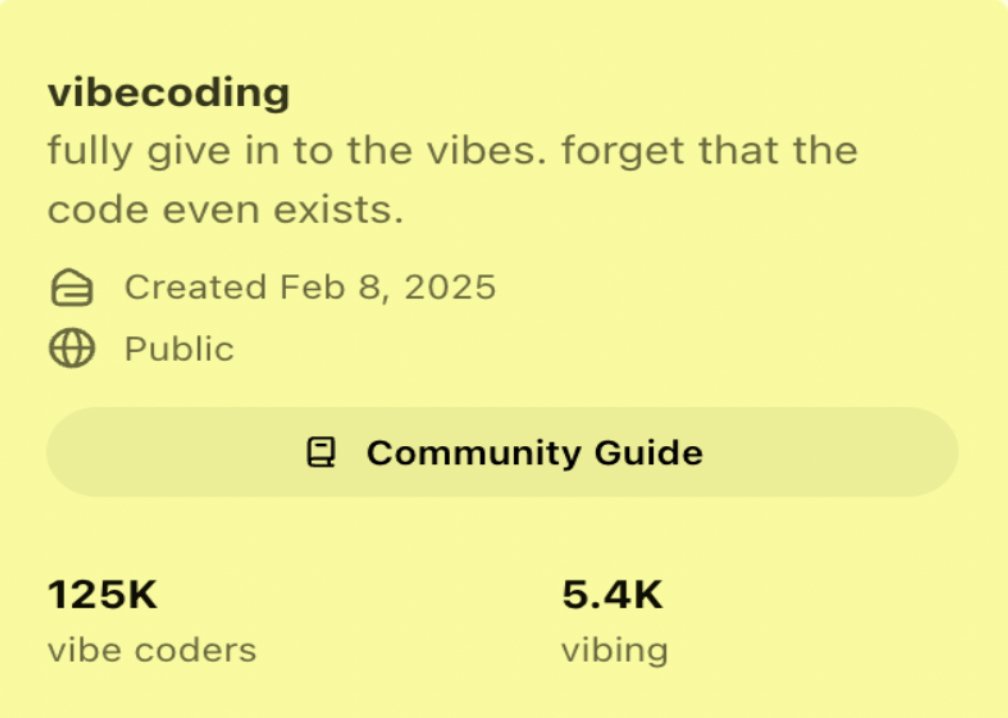
“What began as memes has crystallized into methodology. This is the Vibe Coding code of conduct, crowdsourced, self-imposed, and deeply pragmatic.”
But it’s not just internet-native devs who are vibing.
One widely shared post on the same subreddit recounts a surprising shift in high school classrooms:
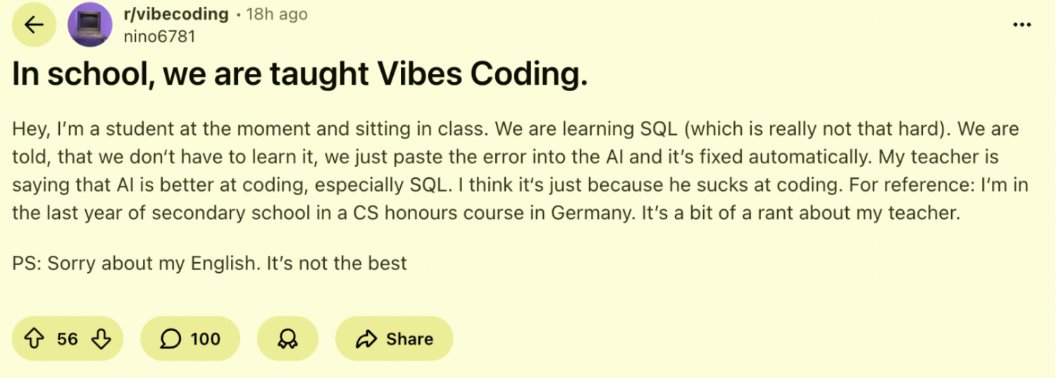
Welcome to the new normal, where teaching programming starts with prompt literacy, not syntax memorization.
This is the key shift: vibe coding isn’t just tooling. It’s a mindset. A new literacy. And the cultural infrastructure built around it, from subreddits to courseware, has laid the foundation for its crossover into new domains.
Enter Web3: Vibe Coding Meets Decentralization
While Web2 stacks focused on convenience, Web3 demanded composability, security, and on-chain finality. Vibe coding evolved accordingly.
- Thirdweb (https://thirdweb.com/) enabled LLM-friendly smart contract templates.
- Blockscout (https://www.blockscout.com/ )launched gas tracker dApps via prompt tutorials.
- Replit shipped Web3 templates for contract+UI+deploy.
- Directual enabled drag-and-drop Web3 app builders.
But not all builders are made equal.
While some tools still reject smart contract generation or shift the responsibility to developers, others have embraced fully native AI execution.
CodeXero: Full-Stack Vibe Coding, On-Chain
While others offer fragmented tooling, @CodeXero_xyz delivers the entire vibe coding pipeline, from prompt to full smart contract and deployable UI, without needing boilerplate or setup.
It’s one of the few Web3-native tools that doesn't just mimic Web2 workflows but reimagines them for on-chain creation. Every module, from token vaults to full AI agents, is composed through semantic inputs, not config files.
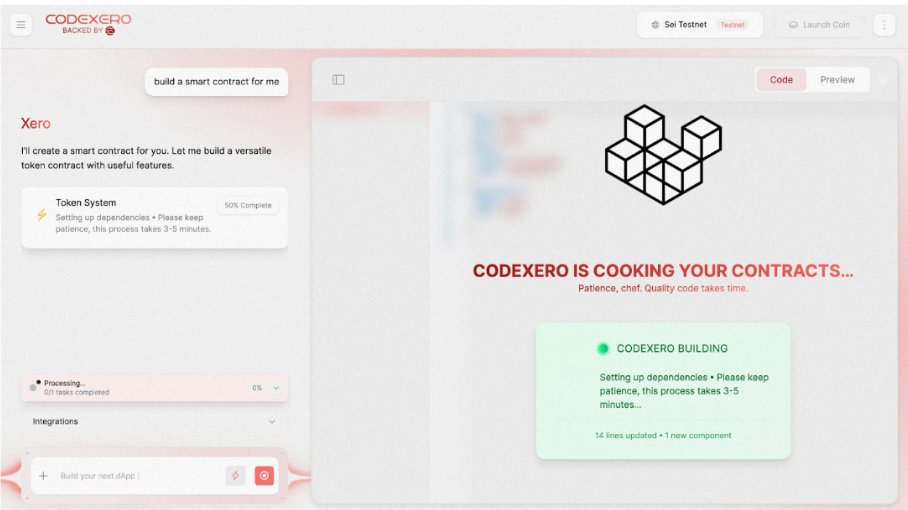
Let’s look at how CodeXero compares to a traditional Web2 builder when asked to “build a smart contract.”
Traditional AI builders like CreateAnything.com refuse blockchain-specific tasks, often replying that they only support JavaScript apps or front-end logic. The result? You still need a developer to bridge AI output with on-chain logic.
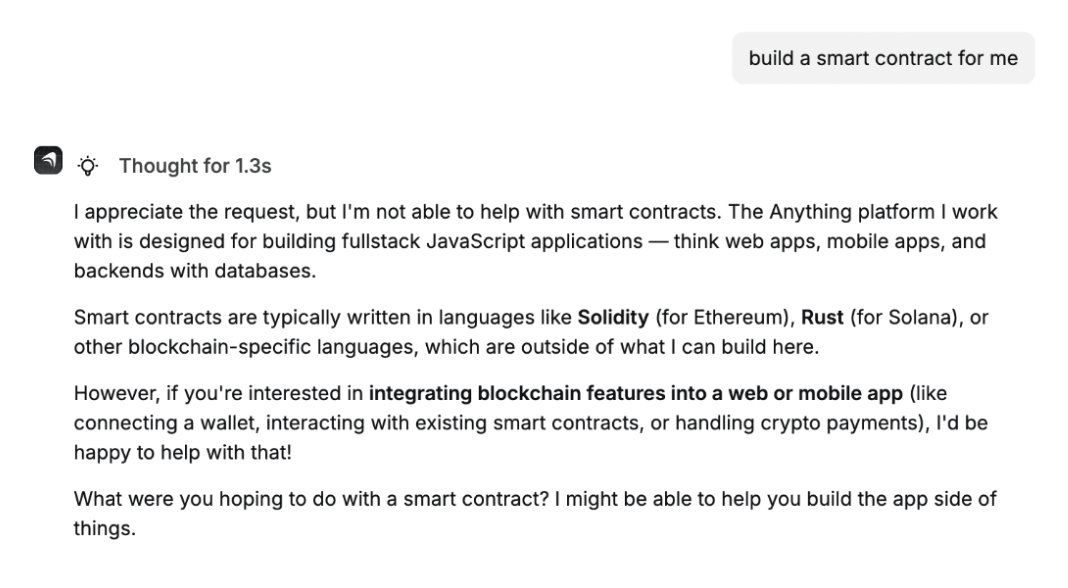
CodeXero, on the other hand, builds fully functional smart contracts directly from prompts, setting up dependencies, configuring tokens, and deploying to the Sei Testnet autonomously. No dev handoffs, no boilerplate
Notable trend: projects now optimize documentation for LLMs, not just humans. Example: thirdweb’s new docs are structured for prompt clarity.
Benefits vs Challenges: The Honeymoon’s Over
Benefits:
- Speed of development (days to hours)
- Entry for non-devs
- Creativity unlocked by semantic coding
Challenges:
- Debugging across agent chains
- Testing is fragile without clear test specs
- Over-reliance on closed tools (Web2 lock-in)
- Open-source LLMs = inconsistent output without strong prompt scaffolding
📌 These risks have been echoed across developer forums and industry write-ups throughout 2025.
What Comes Next? (Signals + Systems)
We’re now entering the multi-agent dev era:
- Architect agent (Claude)
- QA agent (Gemini)
- Reviewer bot (OpenDevin)
Combined with version-controlled prompts (spec.md, context.md, qa.md), these agents begin to mimic dev teams and build modular memory over time.
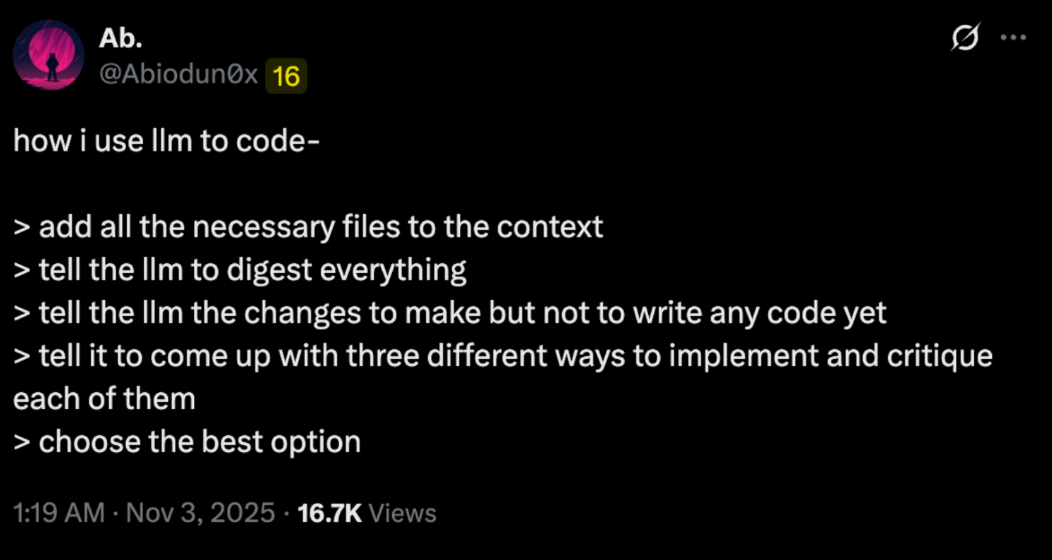
“Power users are treating LLMs less like tools and more like collaborators. As @Abiodun0x puts it…”
Closing: Not a Shortcut. A Shift.
Vibe coding isn’t just a faster way to generate code. It’s a new mode of development where semantic clarity replaces boilerplate, and where dev memory is as important as dev syntax.
From shipping SaaS dashboards to deploying on-chain primitives, the movement is clear: you don’t build line by line anymore. You build by orchestration. You don’t code. You vibe.
And in this new frontier, your IDE is no longer your interface. Your intention is.
About Cluster Protocol
Cluster Protocol is the decentralized AI infrastructure powering the Liberation Engine for Internet Capital Markets.
It provides verifiable compute (PoAC), privacy-preserving execution (FHE/ZK), and modular AI orchestration, enabling developers to turn natural-language prompts into production-grade, tokenized dApps via CodeXero, Cluster's AI-native IDE.
Visit: clusterprotocol.ai🔗