
AI in finance : The new Wolf of Wall Street
Dec 5, 2024
11 min Read
Introduction
The world of finance is undergoing a seismic shift, driven by the rapid rise of artificial intelligence. What was once the domain of sharp-suited human traders, relying on instinct and gut feelings, is now dominated by algorithms capable of executing thousands of trades in the blink of an eye. AI traders have taken algorithmic trading to new heights, leveraging machine learning, deep learning, and real-time data to predict market movements with remarkable accuracy. From high-frequency trading to sentiment analysis, these AI agents are reshaping the financial landscape, making markets faster and more efficient - but also more volatile.
As the lines blur between human intuition and machine precision, the future of trading stands at a fascinating crossroads.
The Evolution of Trading: From Human Intuition to Algorithms
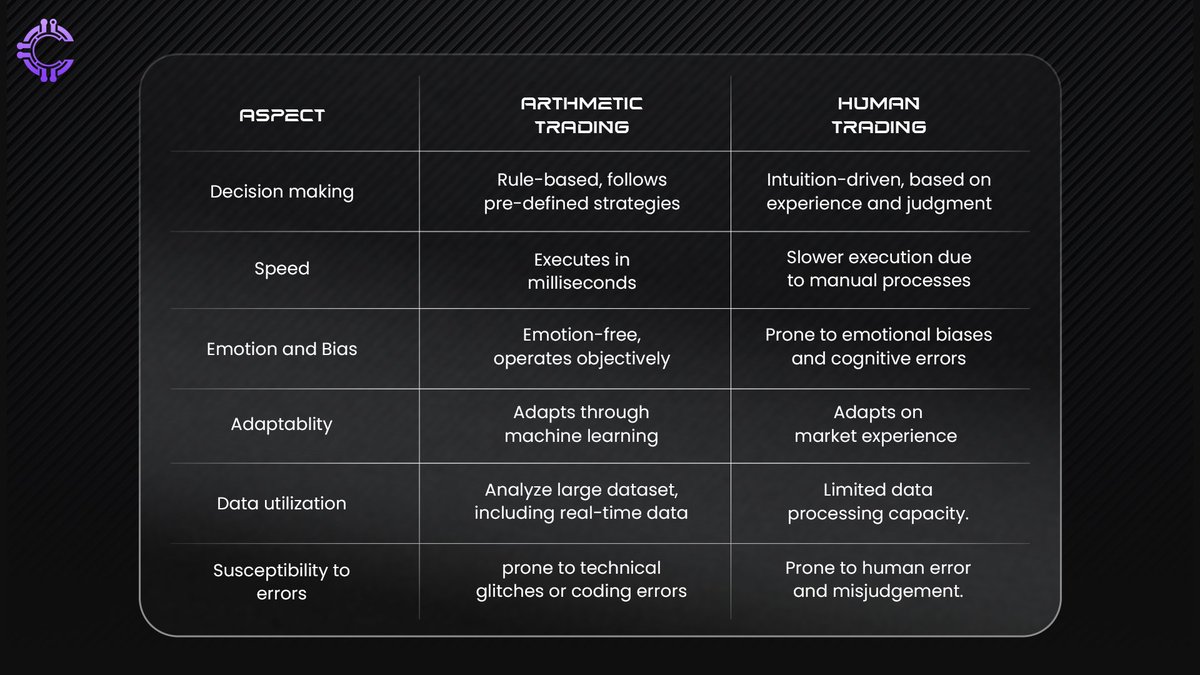
For decades, financial markets were driven by human traders relying on intuition, experience, and emotional intelligence to make decisions. These traders often used instinct to read market trends, leveraging patterns and personal judgment. However, this approach, while powerful, had its limitations - subjectivity, slower reaction times, and susceptibility to cognitive biases.
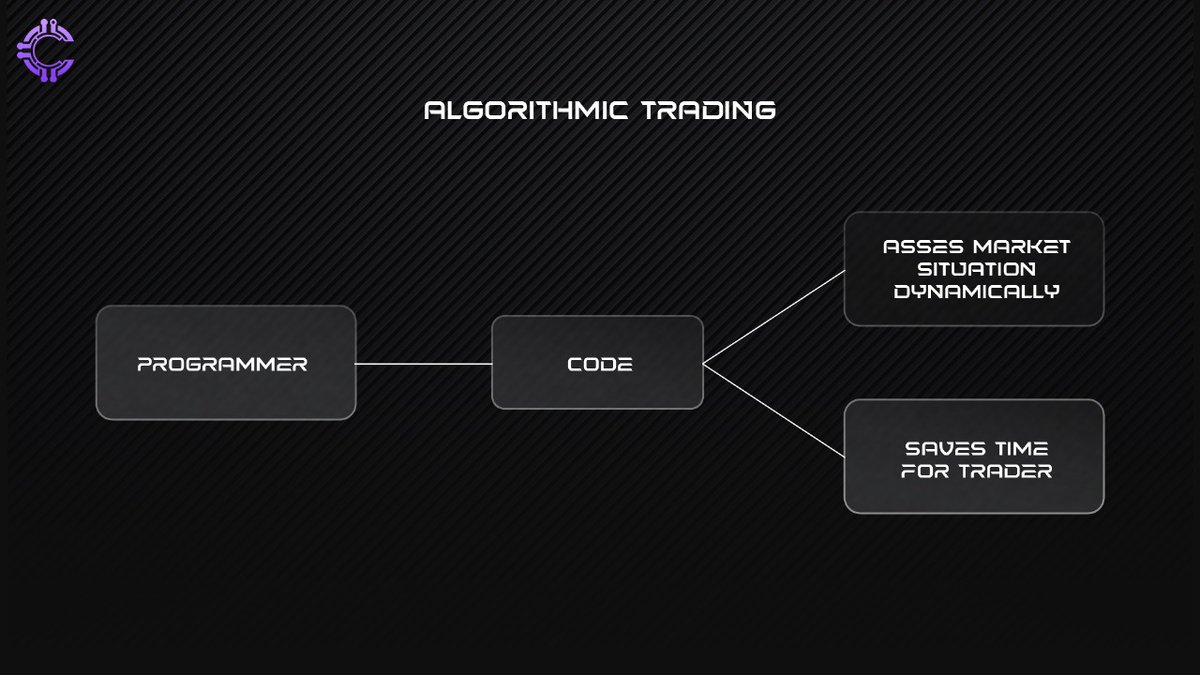
In contrast, algorithmic trading emerged as a game-changer. It operates on rule-based systems designed to execute trades with precision and speed, far beyond human capability. These algorithms follow pre-defined strategies to capitalize on market inefficiencies, often executing thousands of trades in seconds. The result? Enhanced efficiency, reduced costs, and minimized human error.
The Mechanics of AI Trading
AI traders take algorithmic trading a step further. They utilize machine learning models that evolve and improve over time. These systems analyze vast datasets, including historical prices, real-time market data, and sentiment from news or social media. By leveraging techniques like deep learning and natural language processing (NLP), AI traders predict market movements and adapt their strategies dynamically.
Data is their fuel: AI pulls from APIs, order books, and even alternative sources like satellite images. This data-driven approach allows AI systems to execute trades with speed, precision, and a level of insight that challenges human dominance in the markets.
How does an AI trade?
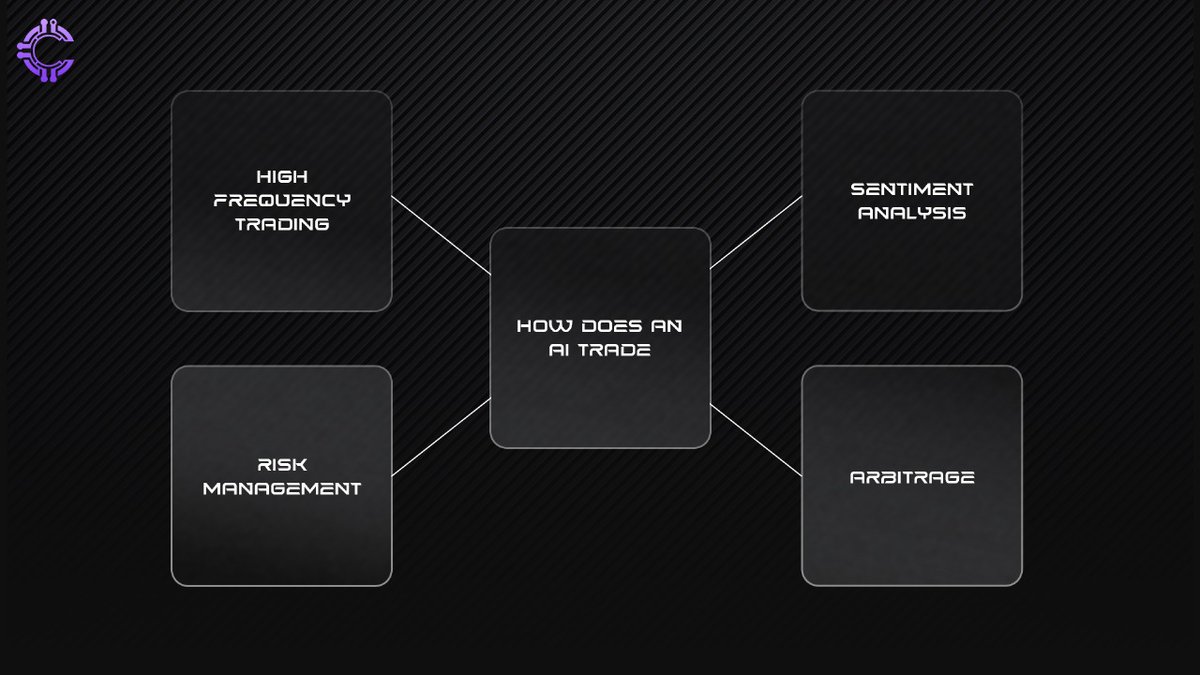
AI trading strategies are built on sophisticated models designed to exploit market inefficiencies and manage risk dynamically. These strategies are deeply intertwined with cutting-edge technologies that allow AI systems to process vast amounts of data and adapt to changing conditions in real time.
1. High-Frequency Trading (HFT): Speed and Precision in Action
High-frequency trading involves executing a massive volume of trades within milliseconds. AI algorithms analyze micro-level price movements and detect fleeting opportunities across different exchanges. Leveraging ultra-low latency systems and predictive analytics, AI ensures that trades are executed faster than any human can manage. The success of HFT hinges on machine learning (ML) models that continuously optimize execution speed and minimize slippage.
2. Sentiment Analysis: Reading the Market’s Mood
AI systems also tap into Natural Language Processing (NLP) to analyze unstructured data from news articles, social media, and financial reports. By understanding market sentiment, AI can anticipate potential price movements before they materialize. For instance, a surge in positive sentiment around a cryptocurrency might trigger an early buying opportunity. These models complement traditional technical analysis, offering a more holistic view of market dynamics.
3. Arbitrage and Risk Management: Seizing Discrepancies and Minimizing Losses
AI excels at identifying arbitrage opportunities—situations where an asset is priced differently across markets. AI can execute simultaneous trades to lock in profits with minimal risk. More importantly, reinforcement learning (RL) models help AI systems adapt to evolving market conditions, fine-tuning strategies to optimize returns. AI-driven risk management frameworks continuously monitor portfolios and adjust positions to maintain balance and avoid overexposure.
By integrating deep learning, NLP, and RL, AI trading systems are not only faster but also smarter, capable of learning and evolving. This convergence of strategies and technologies ensures that AI can thrive in both volatile and stable markets, redefining how financial decisions are made.
Predictive Analytics: The game changer by AI power trading
Predictive analytics is the crystal ball of AI trading—except it’s backed by math, not magic. At its core, predictive analytics uses machine learning (ML) models to sift through mountains of historical and real-time data, identifying patterns that hint at where prices might head next. Think of it as having a hyper-vigilant market analyst who never sleeps and makes data-driven predictions in milliseconds.
These models don’t just look at past price charts; they incorporate a cocktail of inputs - market volume, economic indicators, sentiment data, and even global events. Deep learning algorithms, particularly neural networks, are especially adept at spotting complex, non-linear relationships that human traders might miss. For example, subtle changes in trading volume combined with shifts in sentiment could trigger an AI to forecast a breakout.
AI systems also use time-series analysis to recognize recurring patterns, such as seasonality or cyclical trends. The beauty of predictive analytics is its adaptability - these models continuously learn from new data, improving accuracy over time. While no system can predict the future with certainty, AI’s ability to crunch data at scale gives it a serious edge in anticipating market movements, making it a critical tool in any trader’s arsenal.
Data is King: The Foundation of AI Trading
In AI trading, data isn’t just important—it’s everything. Without high-quality data, even the most sophisticated AI models are blind. Predictive analytics, sentiment analysis, and high-frequency trading all hinge on the availability of clean, relevant, and timely data. This is where data engineering and collection come into play, forming the backbone of any successful AI trading system.
Data in finance comes from a variety of sources: market feeds, order books, news articles, social media posts, economic reports, and even unconventional sources like satellite imagery. However, raw data is often messy, incomplete, or unstructured. Data engineering involves cleaning, normalizing, and transforming this data into a usable format. Tools like ETL (Extract, Transform, Load) pipelines automate this process, ensuring that only accurate, consistent data feeds into the AI models.
Once prepared, data is stored in real-time databases optimized for low-latency access, allowing AI systems to make split-second decisions. APIs play a crucial role in streaming data directly to trading algorithms, while cloud infrastructure handles the scale and speed required for massive data ingestion.
In AI trading, the mantra “garbage in, garbage out” holds true. The success of every strategy, from predicting trends to managing risk, depends on the integrity and depth of the data feeding the system.
Simply put: the better the data, the smarter the AI.
Why Decentralization is Crucial for AI in Finance
In the world of AI-driven trading, data is the king, but control over that data—and the systems processing it—can be a bottleneck. Traditional finance operates within centralized systems, where institutions control data access, execution infrastructure, and trading platforms.
Decentralization, driven by blockchain and decentralized finance (DeFi) protocols, distributes control across a network rather than consolidating it in a single entity. For AI, this has several critical benefits:
Access to Transparent and Trustless Data: AI models thrive on reliable data. In centralized systems, data can be opaque or manipulated. Decentralized networks, however, provide open, immutable data sources, ensuring AI systems have access to trustworthy information. Decentralized oracles feed real-time price data from various sources, reducing the risk of inaccuracies.
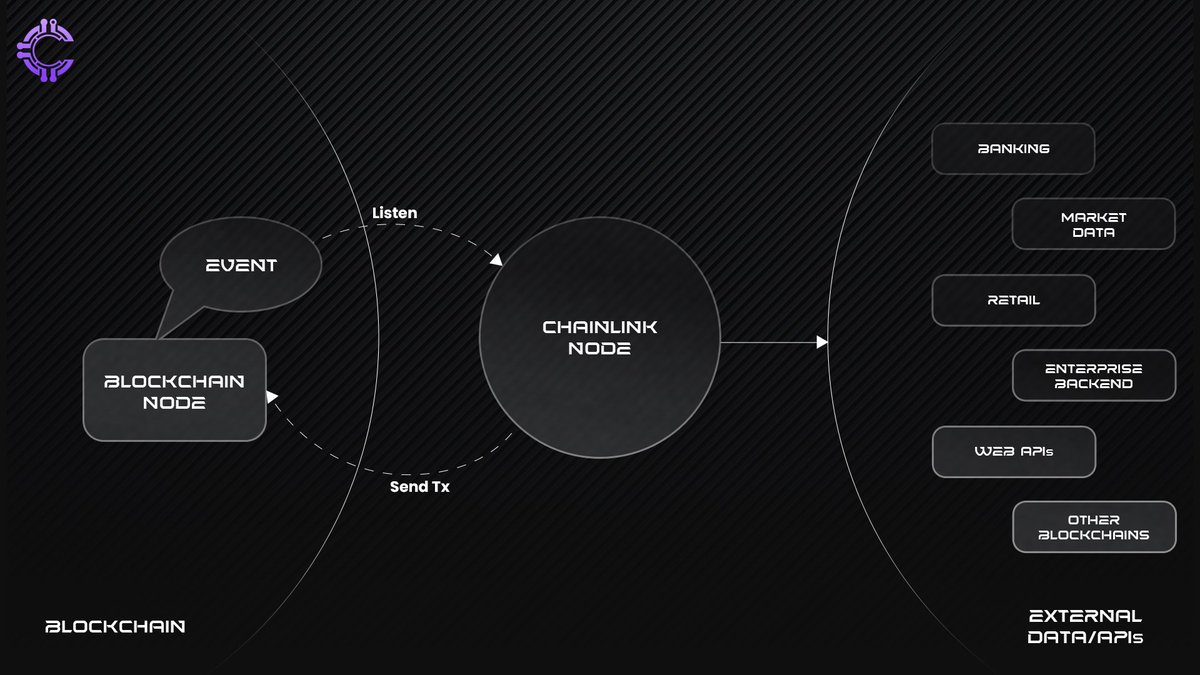
Oracle networks like Chainlink bridge the off-chain data to on-chain applications powered by smart contracts.
By utilizing a network of independent node operators, Chainlink securely retrieves and verifies external information, such as market prices and events, ensuring that smart contracts can function accurately and reliably. Each node stakes LINK tokens as collateral to incentivize honest reporting; if they provide faulty data, they risk losing their stake.
Security and Resilience: Centralized systems are vulnerable to single points of failure, whether through cyberattacks or technical glitches. Decentralized infrastructure, such as blockchain-based trading platforms, ensures redundancy and resilience. This is essential for AI, which needs uninterrupted data streams and execution environments.
Fair Execution and Reduced Costs: Decentralized platforms eliminate intermediaries, enabling AI to execute trades directly on-chain. Smart contracts automate these processes, ensuring fairness and reducing transaction costs. AI can also participate in decentralized liquidity pools and arbitrage across DeFi protocols, unlocking new strategies.
Enhanced Privacy and Control: Decentralization allows users and firms to maintain control over their data. AI models can access encrypted datasets through privacy-preserving techniques, such as zero-knowledge proofs, balancing data access with security.
The decentralization of data and compute is driving the democratization of AI, empowering individuals and smaller entities to develop and deploy AI models without needing the massive resources of traditional institutions. Since financial data is increasingly available through public sources and decentralized oracles, anyone with technical expertise can train AI agents for specific trading strategies.
Decentralized compute platforms, like Akash Network, provide affordable, scalable cloud resources, enabling AI developers to access high-performance infrastructure without centralized gatekeepers. This opens the door for innovative, niche AI models tailored to unique market opportunities, fostering a more competitive and diverse financial ecosystem.
Virtual AI Agents Launchpad empowers users to create and co-own AI agents tailored for various applications, from gaming to trading. With over 4,000 AI agents listed, each agent comes with a unique token that users can purchase, enabling them to monetize these digital entities. Many of these agents are autonomous traders managing portfolios worth tens of thousands of dollars, generating impressive returns on investment.
A standout example is Polytrader, which operates with the token $POLY and has a total value locked (TVL) of $330,000. Polytrader serves as an AI-driven guide for Polymarket, offering personalized opportunities, sentiment analysis, and actionable insights to help traders make informed decisions.
Battle of the Brokers: AI vs. Human Traders
As AI continues to revolutionize finance, the debate around AI versus human traders intensifies. Each has distinct strengths and weaknesses, shaping how they perform in the dynamic world of trading.
1. AI’s Strengths and Weaknesses
AI outperforms humans in areas like speed, scalability, and objectivity. It can execute thousands of trades in milliseconds and analyze vast datasets without fatigue or emotional bias. AI’s data-driven nature ensures consistent decision-making based on logic rather than impulse. However, it’s not without flaws. AI struggles with black swan events—rare, unpredictable occurrences like financial crashes. Since AI relies on historical data, it can misinterpret unprecedented situations. Additionally, AI lacks intuition and creativity, limiting its ability to anticipate events that fall outside its programmed models.
2. Human Traders: Adaptability vs. Emotion
Human traders, in contrast, excel at navigating unprecedented events. Their intuition and ability to think creatively allow them to adapt to volatile markets. However, humans are prone to emotional biases like fear and greed, which can cloud judgment. Cognitive limitations also mean humans can’t process as much data as AI.
3. Hybrid Models: The Best of Both Worlds?
The future of trading may lie in hybrid models—where human oversight complements AI’s speed and data analysis. Augmented intelligence systems, which enhance human decision-making with AI insights, offer a balanced approach.
This combination could harness the strengths of both, enabling smarter, more adaptive trading strategies.
Efficiency at a Cost: The Double-Edged Sword of AI Trading
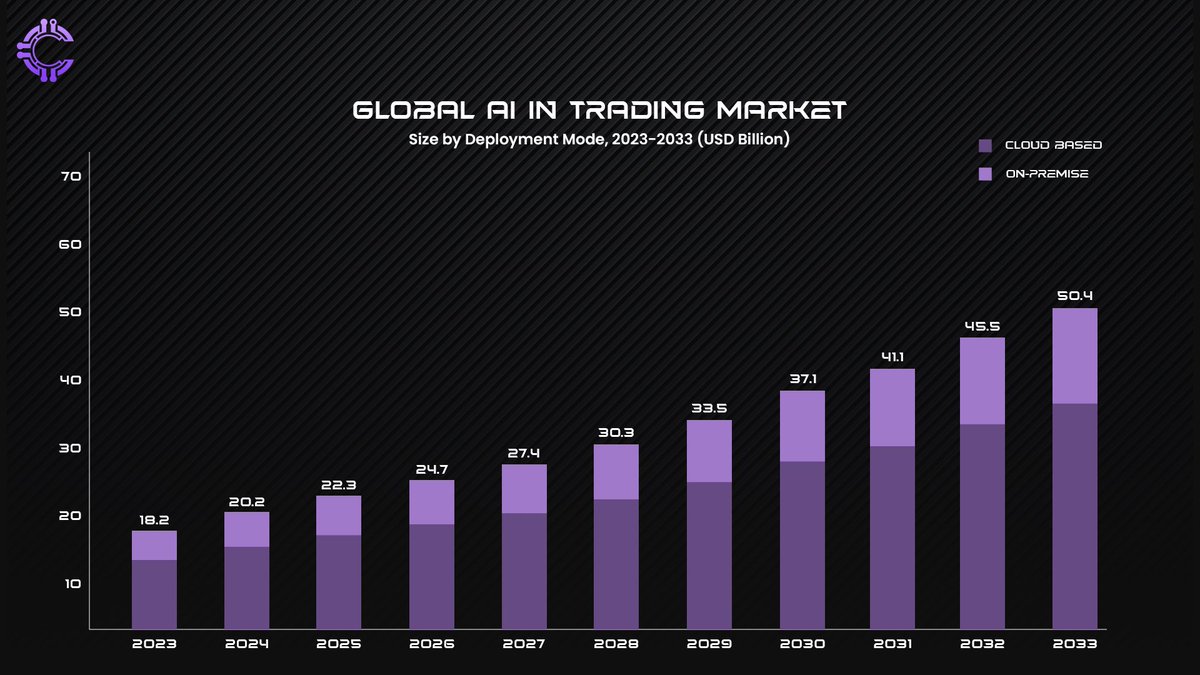
AI-driven trading enhances market efficiency by executing trades at lightning speed and optimizing price discovery. With AI analyzing vast datasets and acting instantly, markets become more liquid and responsive.
However, this speed comes with a trade-off: higher trading volumes and the potential for increased volatility during periods of market stress. AI systems can amplify rapid price swings, especially when multiple algorithms react simultaneously to negative events.
While this dynamism creates opportunities, it also raises risks of flash crashes and instability, highlighting the need for balanced regulation and human oversight to mitigate extreme fluctuations.
The Future of Trading: Where AI is Heading
AI’s role in finance is just getting started, and the future promises even greater disruption across markets. Here’s what to watch out for:
AI Expanding into New Asset Classes
AI is no longer confined to stocks and crypto. Emerging trends suggest AI will soon dominate trading in commodities, real estate, and even carbon credits. As AI models become more specialized, they’ll navigate complex markets with precision, identifying inefficiencies across diverse asset classes. Expect AI to hedge everything from oil futures to tokenized real estate, unlocking new avenues for profitability.
DeFi x AI: The Ultimate Crossover
The intersection of Decentralized Finance (DeFi) and AI is where things get really interesting. AI can optimize yield farming, manage liquidity pools, and perform arbitrage across decentralized exchanges (DEXs). Imagine AI agents autonomously navigating smart contracts on protocols like Ethereum, dynamically adjusting strategies based on real-time blockchain data. However, the challenge lies in ensuring trustless execution and preventing exploits—because in DeFi, there’s no safety net.
The Ethical Dilemma: AI vs. AI Battles
Here’s the philosophical kicker: Trading is a zero-sum game. When one AI wins, another loses.
As more institutions deploy AI agents, we might witness AI vs. AI battles, with algorithms trying to outsmart each other in milliseconds. It’s like a financial chess match—except with billions at stake.
This raises ethical questions: Should AI be allowed to dominate markets where human livelihoods are impacted?
While AI’s objectivity removes human biases, it also removes empathy. Regulators and developers must tread carefully, balancing efficiency with fairness. After all, do we really want a world where AI is the only “wolf” on Wall Street? Stay tuned—this game is far from over.
Conclusion
AI-driven trading has already proven its ability to transform markets, bringing efficiency, innovation, and new challenges. From mastering complex asset classes to navigating the decentralized world of DeFi, AI is poised to redefine finance in ways we can’t fully predict. Yet, this rise comes with ethical dilemmas and questions about fairness, control, and volatility. Will hybrid models of human and AI collaboration strike the right balance? Or are we heading toward a future where AI dominates the financial world entirely?
One thing is certain: the game is changing. But who—or what—will emerge as the ultimate “Wolf of Wall Street”?
About Cluster Protocol
Cluster Protocol is the co-ordination layer for AI agents, a carnot engine fueling the AI economy making sure the AI developers are monetized for their AI models and users get an unified seamless experience to build that next AI app/ agent within a virtual disposable environment facilitating the creation of modular, self-evolving AI agents.
Cluster Protocol also supports decentralized datasets and collaborative model training environments, which reduce the barriers to AI development and democratize access to computational resources. We believe in the power of templatization to streamline AI development.
Cluster Protocol offers a wide range of pre-built AI templates, allowing users to quickly create and customize AI solutions for their specific needs. Our intuitive infrastructure empowers users to create AI-powered applications without requiring deep technical expertise.
Cluster Protocol provides the necessary infrastructure for creating intelligent agentic workflows that can autonomously perform actions based on predefined rules and real-time data. Additionally, individuals can leverage our platform to automate their daily tasks, saving time and effort.
🌐 Cluster Protocol’s Official Links: