
AI in legal Compliance: From Manual Review to Intelligent Automation
Feb 20, 2025
10 min Read

The Rise of AI in Legal Automation
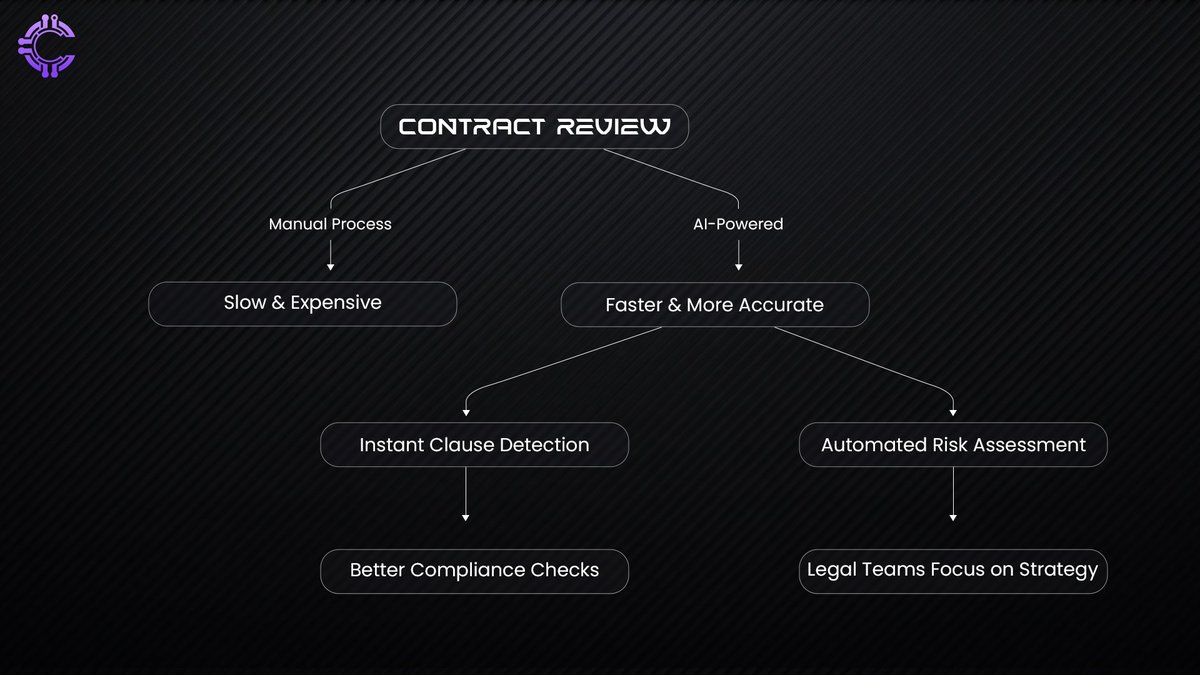
Legal teams have long struggled with contract review- slow, expensive, and riddled with human error. But AI is fundamentally changing that. Using natural language processing and machine learning, AI-powered tools can scan, analyze, and flag contract clauses in seconds, cutting review times from days to minutes. This isn’t just about efficiency; it’s about precision. AI reduces oversight risks in complex legal documents, ensuring compliance gaps don’t slip through the cracks.
Yet, AI isn’t here to replace legal professionals, it’s here to empower them. By acting as an always-on assistant, AI identifies compliance risks, surfaces negotiation insights, and ensures contracts align with company policies and regulatory requirements. Lawyers can shift their focus from manual document review to higher-value strategic tasks.
Adoption Trends: The Shift to AI-Driven Compliance
The corporate world isn’t waiting. From Fortune 500 enterprises to startups, businesses are embedding AI into their legal workflows at scale. Compliance teams are leveraging AI to ensure contracts are airtight, policies are enforced, and regulatory risks are flagged before they escalate into costly disputes. AI isn’t just a convenience, it’s becoming an operational necessity.
The acceleration of AI in legal automation is driven by rising regulatory complexity. Laws change frequently, and businesses must keep up. AI-powered compliance tools continuously monitor evolving regulations, automatically updating contract templates and flagging risks in real time. This dynamic approach ensures organizations don’t just react to compliance requirements, they stay ahead of them.
From Bottlenecks to Breakthroughs: The AI Revolution in Compliance
For decades, contract review has been an exhausting manual process. Legal teams have had to comb through dense documents, spot risks, and ensure compliance with ever-evolving laws. It’s slow, expensive, and far from perfect. A single overlooked clause can trigger financial penalties, regulatory issues, or disadvantageous agreements. AI is changing that narrative.
By scanning contracts at scale, identifying anomalies, and flagging non-compliant clauses instantly, AI transforms legal review from a reactive task into a proactive safeguard. But beyond just catching risks, AI reshapes legal operations financially. Companies that once spent millions on external counsel for compliance checks are now reallocating those budgets to innovation and strategic growth.
How AI Understands and Identifies Contract Clauses
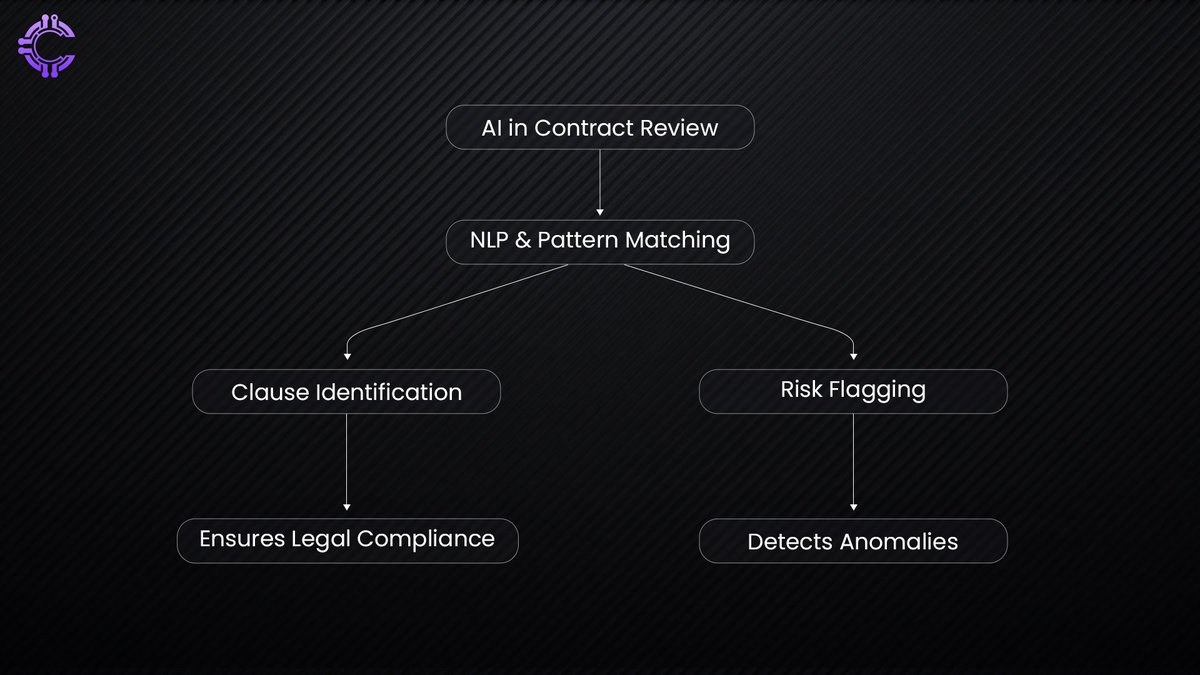
Contracts are dense, filled with legal jargon, and often structured in ways that make manual review tedious and error-prone. AI is cutting through this complexity. Using natural language processing (NLP), AI can identify and extract key clauses- payment terms, liability limits, indemnities- instantly.
Instead of manually searching for critical terms, legal teams get an automated breakdown, highlighting every relevant section in seconds.
But it’s not just about identification; it’s about understanding. AI models trained on vast legal datasets can interpret contract language with near-human accuracy. They recognize intent, flag ambiguous wording, and even suggest rewording to align with company policies or industry standards. The result? Faster reviews, fewer disputes, and a more streamlined contract negotiation process.
AI isn’t just reading contracts- it’s understanding them, learning from them, and ensuring they stand up to scrutiny.
AI as a Compliance Enforcer: Pattern Recognition and Risk Detection
Ensuring contracts comply with internal policies and regulatory requirements is a monumental challenge, especially for large organizations managing thousands of agreements. AI simplifies this by using pattern recognition to match contract terms against predefined templates, flagging deviations that might introduce legal or financial risks. If a vendor agreement lacks a standard data protection clause or contains terms that contradict GDPR, AI immediately catches it.
Anomaly detection takes this even further. AI doesn’t just compare contracts to known templates- it identifies unusual language, unexpected risks, and hidden liabilities. This means fewer surprises and stronger legal protections. Even across multiple languages, AI-powered translation ensures that contract terms remain consistent and legally sound, regardless of jurisdiction.
Real-World AI Applications in Legal Workflows
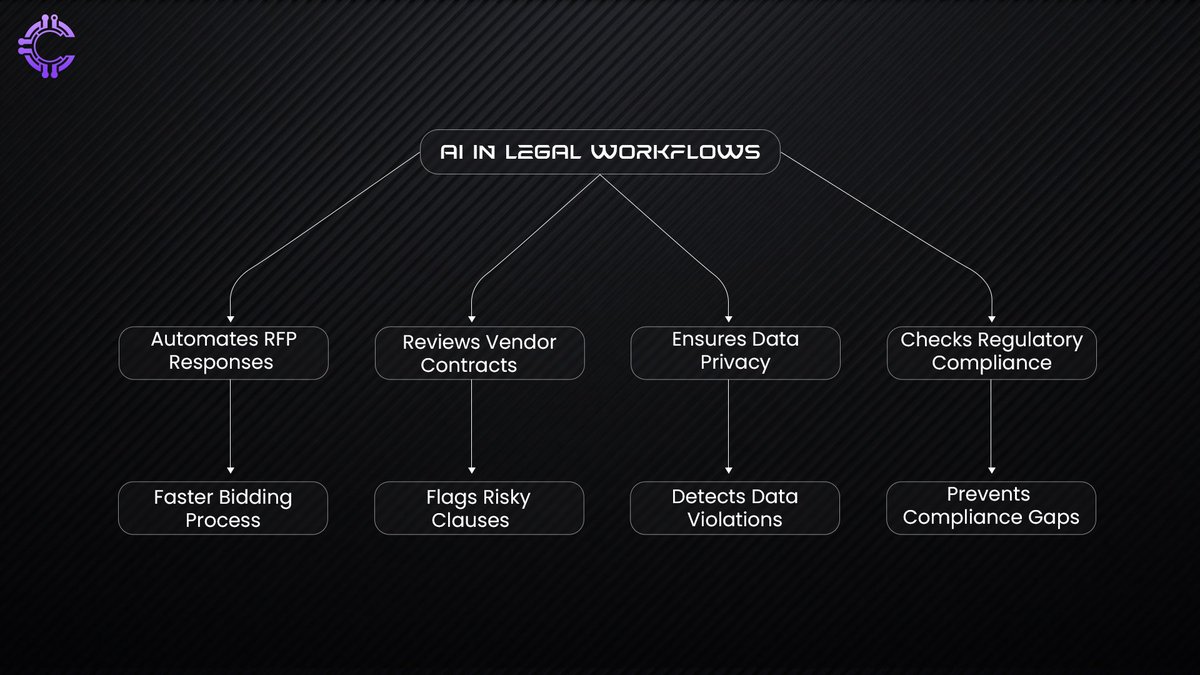
AI is no longer a futuristic concept in legal compliance- it’s an active force driving efficiency, reducing risk, and transforming how organizations handle contracts and regulations. From automating proposal responses to ensuring airtight regulatory adherence, AI is proving its value across industries.
RFP Response Automation: Speeding Up the Bidding Process
The traditional RFP process is a bottleneck. Legal and sales teams must analyze lengthy documents, cross-reference policies, and tailor responses- all under tight deadlines. AI simplifies this by instantly scanning RFP requirements, ensuring alignment with compliance standards, and generating accurate, structured responses. This means faster turnaround times, fewer manual errors, and a higher success rate in competitive bidding.
Vendor Agreement Review: Mitigating Supplier Risks
Supplier contracts are full of compliance landmines. AI-powered tools analyze agreements, flagging missing data security clauses, liability gaps, and misaligned terms before they become legal liabilities. With AI ensuring that contracts adhere to internal policies and industry regulations, businesses gain better negotiation leverage while minimizing financial and legal exposure.
GDPR & Data Privacy Compliance: Automating Risk Detection
With global privacy laws tightening, AI acts as an always-on compliance officer. It detects risky clauses related to unauthorized data-sharing, missing consent provisions, and jurisdictional conflicts- allowing businesses to adjust terms before they violate regulations like GDPR, CCPA, and HIPAA.
Regulatory Compliance Enforcement: Staying Ahead of Legal Risks
AI doesn’t just review contracts- it continuously monitors regulatory frameworks such as SOX, FCPA, and PCI-DSS, ensuring agreements remain compliant even as laws evolve. With automated policy enforcement, businesses can scale without worrying about undetected compliance gaps.
The Brains Behind AI Legal Agents: How They Work Under the Hood
AI can automate legal compliance, but behind the slick automation lies a complex technical foundation. At the heart of AI-driven contract analysis are large language models (LLMs) specifically trained for legal text comprehension. Unlike general-purpose AI, which struggles with the nuances of legal language, law-trained AI agents are fine-tuned on case law, regulations, and industry-specific contracts. These models don’t just understand words- they grasp intent, interpret obligations, and distinguish between enforceable terms and mere suggestions.
Vector search - Scaling legal tech
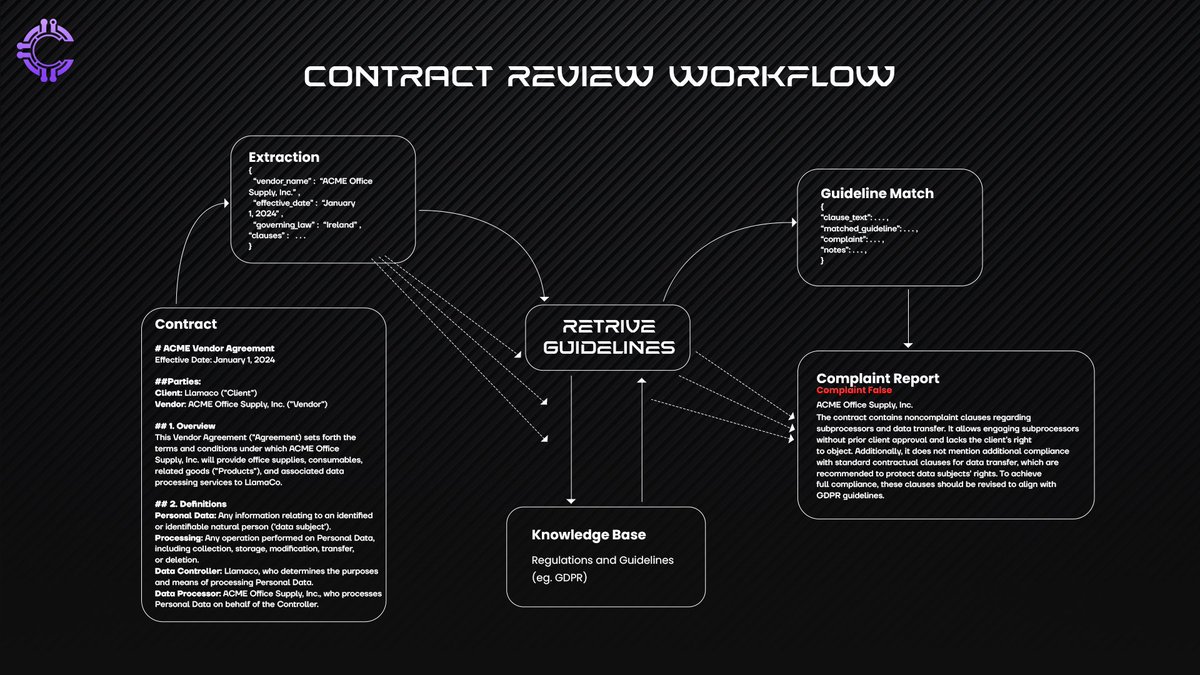
Vector search is a game-changer for AI in legal compliance. Instead of relying on keyword matches, AI encodes legal text into high-dimensional vectors, allowing it to find conceptually similar clauses across thousands of contracts. When reviewing an agreement, AI can instantly compare clauses against past contracts, regulatory frameworks, and internal policies- even if the wording is different. For example, if a vendor agreement lacks a standard data protection clause, vector search identifies similar cases, retrieves the correct language, and suggests revisions. This ensures consistency, speeds up contract negotiation, and reduces the risk of non-compliant or unfavorable terms slipping through.

A critical component of AI legal agents is their ability to reference knowledge bases and perform vector searches. When reviewing a contract, the AI doesn’t operate in isolation, it cross-references previous cases, internal policies, and regulatory guidelines. This enhances retrieval accuracy, ensuring that every clause is analyzed within the right legal and business context. Instead of searching through static rulebooks, AI dynamically pulls relevant precedents, making contract review both faster and more precise.
But AI in legal tech isn’t just about machine learning- it’s about intelligent rule enforcement. Hybrid systems combine machine learning with strict rule-based frameworks, allowing AI to enforce policies through decision trees and predefined compliance standards. If a contract deviates from company policy, AI doesn’t just flag it; it evaluates the severity, suggests corrective actions, and even predicts negotiation outcomes.
In legal tech, AI isn’t just a reviewer; it’s an enforcer, an advisor, and a strategist, reshaping compliance from the ground up.
AI in Contract Negotiation: Smarter, Faster, and Risk-Aware
Contract negotiation is a battlefield of terms, conditions, and risk management. AI is changing the game by enabling automated redlining and intelligent clause negotiation. Instead of manually tracking every change, AI compares proposed modifications against company standards and industry benchmarks in real time. If a counterparty alters an indemnity clause or adjusts payment terms, AI instantly flags deviations, suggests alternative wording, and predicts negotiation outcomes based on historical agreements. It’s not just about catching changes- it’s about strategy.
AI can assess how similar terms were negotiated in past deals, helping legal teams push for better terms with data-driven confidence.
Risk assessment goes a step further. AI-driven compliance flags don’t just highlight problematic clauses, they score them. Every contract undergoes an automated risk evaluation, measuring exposure based on jurisdiction, regulatory obligations, and financial implications. These assessments feed into visual dashboards, giving legal teams a real-time risk heatmap. A contract with non-standard liability terms? High-risk.
A missing confidentiality clause in a vendor agreement? Immediate flag. This proactive approach ensures that compliance isn’t a post-signature concern, it’s built into the negotiation itself.
Balancing AI and Privacy
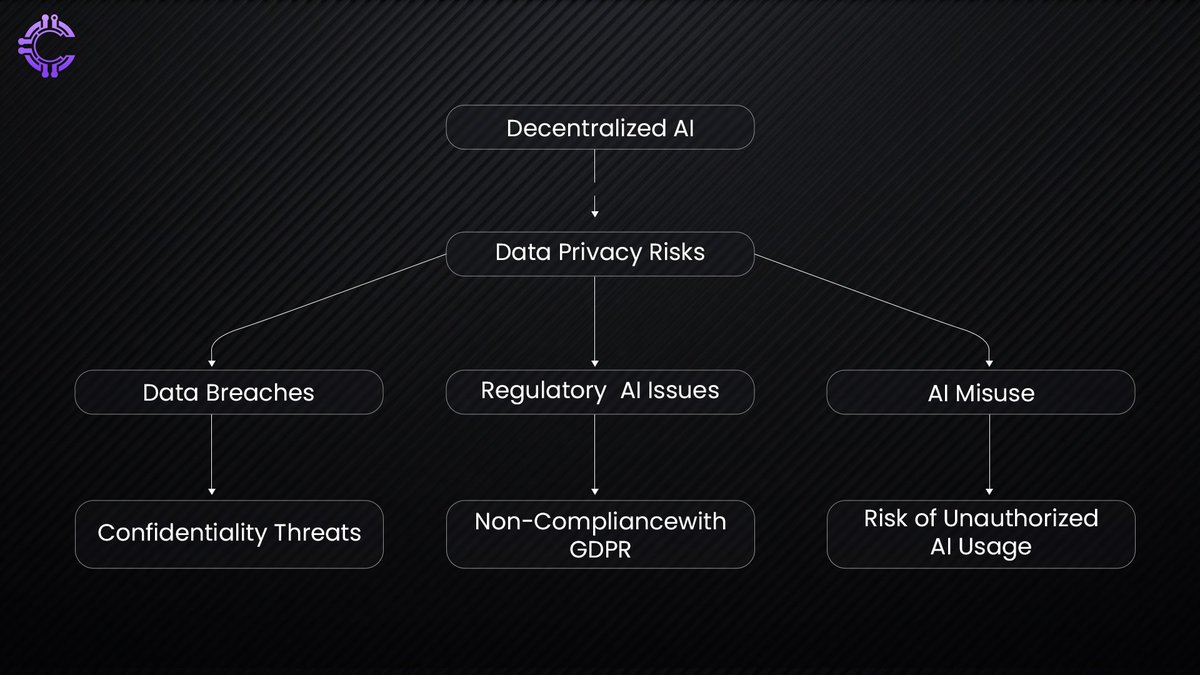
AI-powered legal review promises efficiency, but it also introduces significant privacy risks. Centralized AI models process vast amounts of confidential data, from vendor agreements to M&A contracts.
Feeding sensitive legal documents into cloud-based AI systems raises concerns about unauthorized access, data breaches, and regulatory non-compliance. Many AI models store and learn from past inputs, what happens when proprietary contract language becomes part of an AI’s training data? The legal industry, built on client-attorney privilege and confidentiality, cannot afford these uncertainties.
Cross-border AI processing adds another layer of complexity, as regulations like GDPR and CCPA impose strict controls on how legal data is stored and transferred. The risk isn’t just theoretical, mismanaged AI compliance could lead to real legal liability.
Open-source and decentralized AI models offer an alternative. Self-hosted AI ensures that sensitive legal data stays within a firm’s infrastructure, minimizing exposure to third-party vulnerabilities. Federated learning models allow AI to improve without centralizing training data, preserving confidentiality while still benefiting from AI’s efficiency.
Unlike proprietary systems, open-source AI provides transparency, letting legal teams audit decision-making processes to ensure compliance with industry standards. The trade-off? More control comes with added complexity in deployment and maintenance.
But as AI adoption in legal tech grows, so does the demand for privacy-preserving solutions.
Decentralized AI agents are the natural evolution of legal tech, solving the fundamental flaws of centralized AI- data privacy, security risks, and regulatory conflicts. Unlike cloud-based AI models that aggregate and store sensitive legal documents, decentralized AI operates within a firm’s infrastructure, ensuring that no proprietary data is exposed or misused. With federated learning, AI models can improve without pooling sensitive data, maintaining strict compliance with regulations like GDPR.
On-chain agents : Verifiability with AI
AI in legal compliance operates in a black box. Contracts are reviewed, risks are assessed, and recommendations are made- but there’s no real way to verify if the AI executed its task correctly. Did it miss a critical clause? Did it introduce bias? Did it approve a legally unsound agreement? In centralized AI models, users have no choice but to trust the system. And when things go wrong, liability falls entirely on the user, not the opaque models or the platforms hosting them. This lack of accountability isn’t just a flaw- it’s a structural failure.
Verifiable AI changes this equation. Instead of blindly trusting an AI agent’s output, users can cryptographically verify that every action taken adheres to predefined legal rules and policies. With zero-knowledge (ZK) proofs, AI agents can produce mathematical evidence confirming that their compliance assessments, contract evaluations, and legal recommendations were executed correctly. This means no hidden biases, no silent failures- just verifiable truth. But blockchain itself isn’t suited for heavy AI computations.
Instead, off-chain AI models perform the complex inference work, while on-chain ZK proofs act as a trust mechanism, securing the results without exposing sensitive data. EZKN is a framework which generates a ZK proof for each AI inference computation. ensuring verifiability.
As AI agents evolve into autonomous economic actors, they must be held accountable. Without verifiability, legal AI remains a high-risk black box. With it, compliance automation becomes provable, auditable, and trustworthy- turning AI into a true asset rather than a liability in legal decision-making.
Conclusion
From contract review to regulatory enforcement, AI-driven automation can make legal work faster, more precise, and scalable. However, the risks of centralized AI such as lack of verifiability, data privacy concerns, and hidden biases, make it clear that trust cannot be assumed; it must be proven. The future of AI in legal tech isn’t just about automation- it’s about accountability.
Decentralized AI agents and verifiable computation are reshaping how compliance is managed, ensuring every AI-generated decision is transparent and cryptographically proven. With on-chain verification and off-chain AI inference secured by zero-knowledge proofs, businesses can finally trust that their AI agents are acting correctly. As AI continues to evolve, the firms that embrace verifiable, decentralized compliance solutions will not just keep up with regulations, they’ll define the future of legal automation.
About Cluster Protocol
Cluster Protocol is the co-ordination layer for AI agents, a carnot engine fueling the AI economy making sure the AI developers are monetized for their AI models and users get an unified seamless experience to build that next AI app/ agent within a virtual disposable environment facilitating the creation of modular, self-evolving AI agents.
Cluster Protocol also supports decentralized datasets and collaborative model training environments, which reduce the barriers to AI development and democratize access to computational resources. We believe in the power of templatization to streamline AI development.
Cluster Protocol offers a wide range of pre-built AI templates, allowing users to quickly create and customize AI solutions for their specific needs. Our intuitive infrastructure empowers users to create AI-powered applications without requiring deep technical expertise.
Cluster Protocol provides the necessary infrastructure for creating intelligent agentic workflows that can autonomously perform actions based on predefined rules and real-time data. Additionally, individuals can leverage our platform to automate their daily tasks, saving time and effort.
🌐 Cluster Protocol’s Official Links: