
The Open-Source AI Dilemma: When Innovation Becomes a Commodity
Mar 13, 2025
10 min Read

You spend months, maybe years building something groundbreaking. An AI model that can predict power grid failures before they happen, preventing blackouts and saving billions in economic losses. The journey wasn’t easy. Nights spent fine-tuning algorithms, weekends scraping together datasets from obscure government archives, and a bank account drained from renting GPUs powerful enough to train it all.
But it was worth it. This wasn’t just about research; it was about impact. So, you open-source it, believing that by sharing it, you’re contributing to something bigger. Then, one morning, you see it: a polished enterprise version of your model, locked behind a paywall. Someone else, someone who never spent a night debugging transformer weights, has commercialized your work. And you? You don’t even get a mention.
The Thin Line Between Open and Exploited
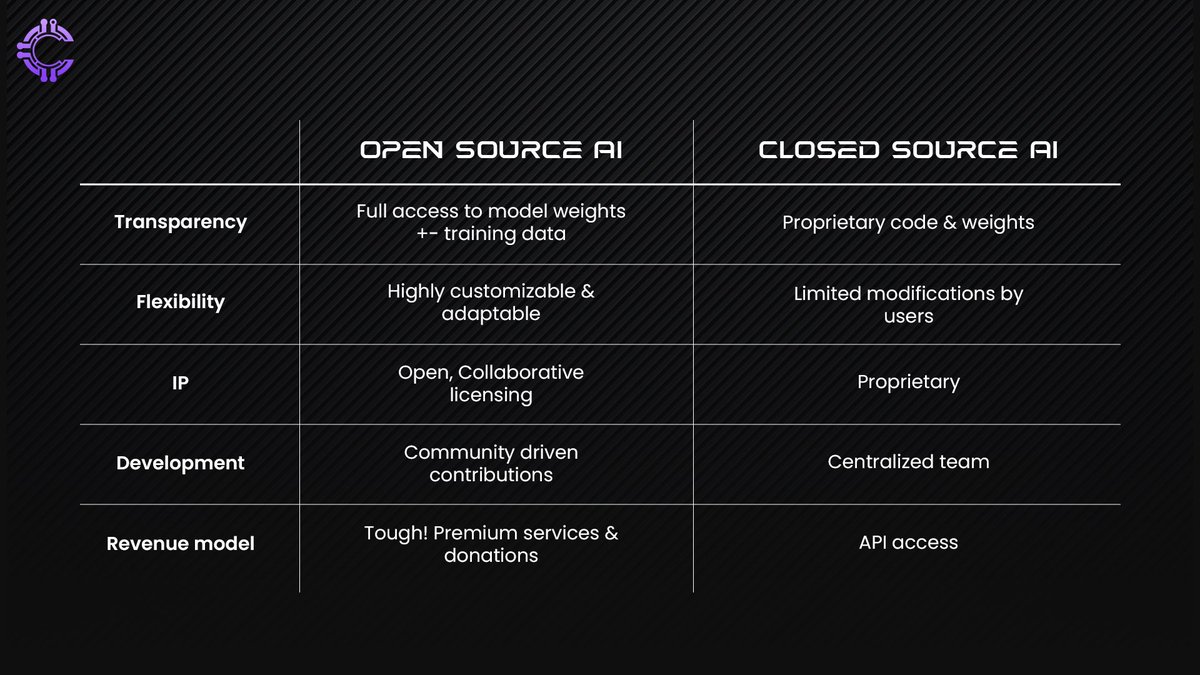
Open-source was built on the idea of collaboration, but AI has changed the game. Unlike traditional software, AI models require:
Massive upfront investment: from compute costs to labeled datasets, none of it comes cheap.
Extensive domain expertise: AI isn’t just code; it’s years of specialized knowledge.
Continuous improvement: models decay without maintenance, yet the ones profiting often don’t contribute back.
So what’s the answer? Do we abandon open-source AI? Do we build better licensing frameworks? Or do we accept that in the AI gold rush, the ones digging the wells rarely get to drink?
The Silent Crisis in Open-Source AI
Open-source AI was never meant to be an extractive system. It was supposed to be a revolution, a world where innovation flowed freely, where the best ideas weren’t locked behind corporate firewalls but shared, refined, and advanced together. And for a while, it worked. The torchbearers of open-source, developers, researchers, and hackers built the foundations of today’s AI, often with nothing but a belief in the mission.
But here’s the problem: belief doesn’t pay rent.
The same openness that made AI accessible also made it exploitable. Every breakthrough in open-source AI is another opportunity for billion-dollar firms to repurpose the work, fine-tune it, brand it, monetize it, while the original contributors are left with GitHub stars and recognition that doesn’t translate into sustainability.
Open-source AI has always relied on an implicit contract: contribute, be part of something bigger, and trust that the ecosystem will reward you in some form. But as the commercialization of AI accelerates, that contract is being torn apart.
A System Running on Empty
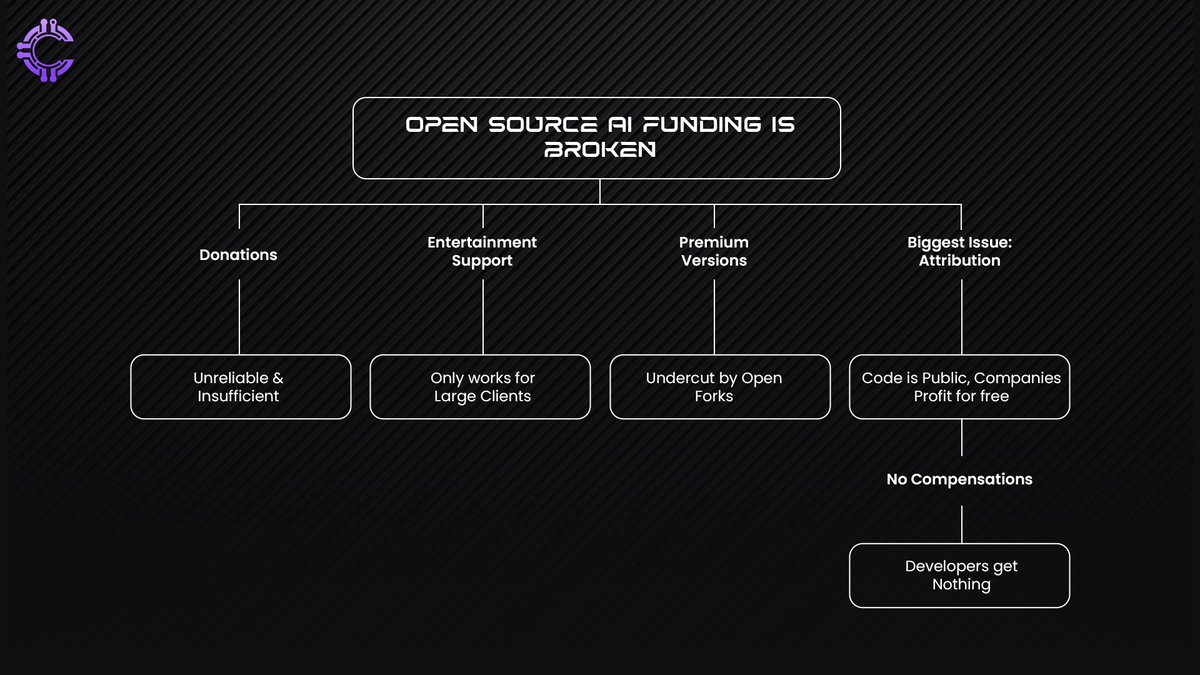
Funding models for open-source AI are a joke. Most projects survive on goodwill, and when that runs out, they collapse. The playbook has been exhausted:
Donations? Unreliable and barely enough to keep projects afloat.
Enterprise support? Works only if you have deep-pocketed clients, which most developers don’t.
Premium versions? A tough sell when an open fork can appear overnight.
And then there’s the biggest issue: attribution is broken. The moment code is public, it’s a free-for-all. Companies scrape, repackage, and profit off open models with zero obligation to compensate their creators.
The Open Source Initiative is working on definitions, but definitions don’t pay the bills. If open-source AI is going to survive, we need something stronger, a model that doesn’t just reward contribution but makes exploitation impossible.
##The Brutal Economics of AI: Why Open-Source Is Falling Behind##
There was a time when a lone researcher with a powerful idea could change the trajectory of AI. That era is gone. Modern AI isn’t built on clever algorithms alone—it’s built on compute, data, and scale. And those things are expensive.
A single state-of-the-art model costs upwards of $1M to train. That’s before factoring in fine-tuning, storage, and inference costs. It’s not just about money, it’s about access. Cloud compute is monopolized by a handful of tech giants, datasets are locked behind legal agreements, and the infrastructure needed to train cutting-edge models is beyond the reach of even the most brilliant independent researchers.
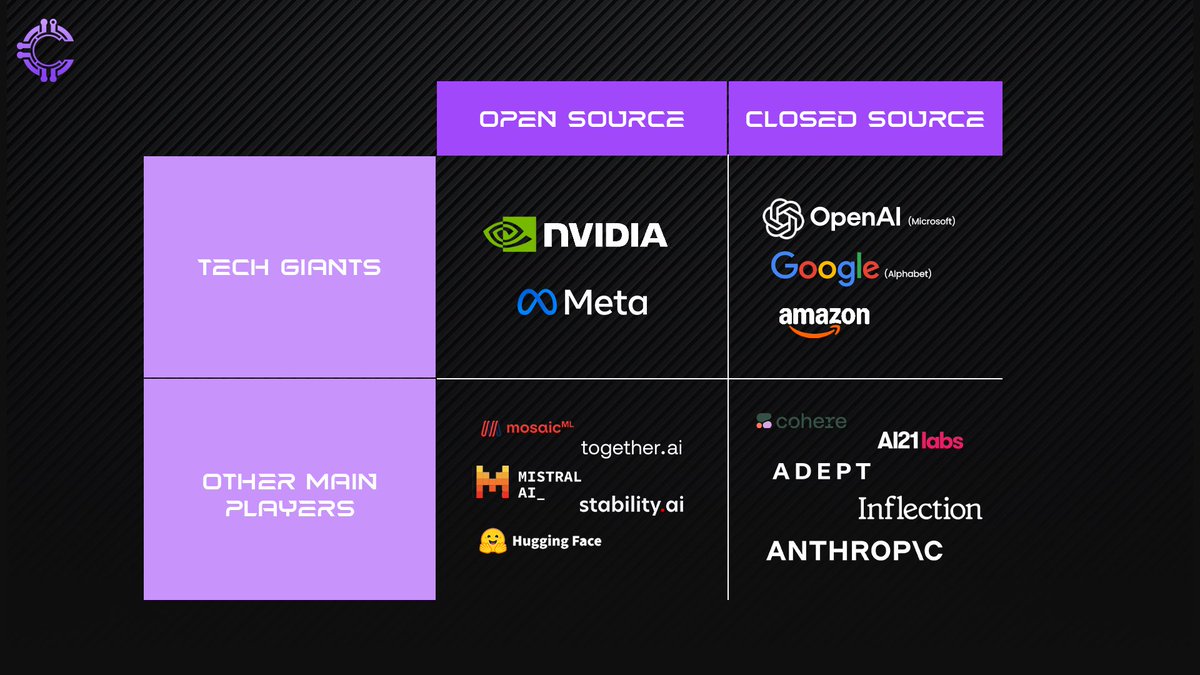
Open-source AI was supposed to democratize access, but the reality is far more complicated. While anyone can fine-tune a model on consumer hardware, true innovation in AI now requires corporate-scale resources. NVIDIA, Google, Meta, and OpenAI dictate the playing field. The rest of the world is left running experiments on borrowed GPUs, hoping to stay relevant.
##The Profit Gap Between Open and Closed AI##

While open-source developers scrape together resources for their next training run, closed AI companies are printing money. OpenAI’s API alone is generating an estimated $500M–$800M per year, with profit margins as high as 80% on certain models. The cost of inference is minimal compared to training, meaning the biggest players are now optimizing for pure profit.
Meanwhile, grassroots AI projects operate on razor-thin margins, fighting for grant money, relying on community donations, or hoping that enterprise clients will throw them a lifeline. The AI economy is bifurcating: open-source projects struggle to survive, while closed-source firms rake in billions.
For many, this feels inevitable. Linux runs 60% of the world’s servers, yet Linus Torvalds never cashed in billions. Open source was never designed to make its creators rich. But if AI follows the same path, we risk an even worse outcome, where open models are just training data for closed ones, and the future of AI remains in the hands of those who can afford to buy it.
##The Future of AI: Smarter, Not Just Bigger##
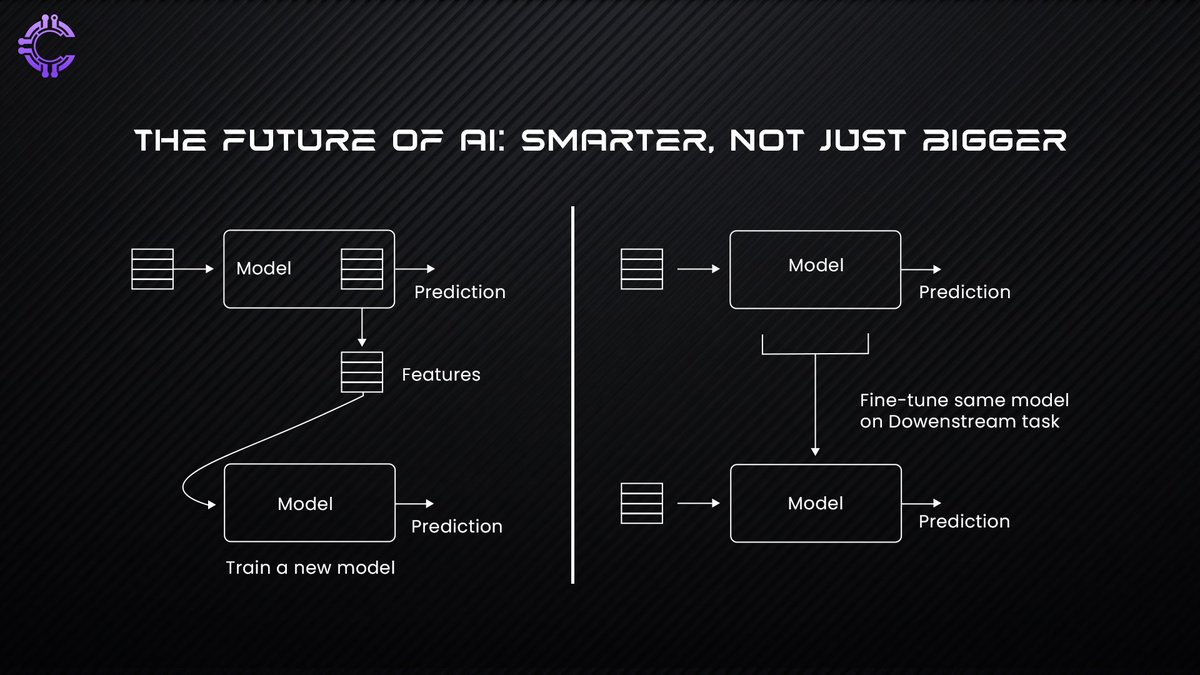
For years, AI development has centered on massive base models, general-purpose systems trained on everything from Wikipedia to leaked codebases. While powerful, they remain blunt instruments. They can summarize a news article or generate generic code, but struggle with specialized tasks like legal analysis or medical diagnostics.
This is where fine-tuning changes everything:
From generalist to specialist: Fine-tuning transforms a strong foundation into an expert. A model trained on proprietary legal cases becomes a contract analyst. One refined on genomic data outperforms human researchers in medical predictions.
Why open-source is key: Tech giants like OpenAI and Google have no incentive to release their best models. True breakthroughs in fine-tuning happen when developers and domain experts have access to open models they can refine.
The shift in power: Pre-training will always belong to corporations with vast compute resources. But fine-tuning? That’s where researchers, startups, and individuals can still lead.
The future of AI isn’t just about scale, it’s about precision. And in this era, open-source isn’t optional. It’s the foundation.
Crypto’s Answer: Moving from Theoretical to Inevitable

For years, monetizing open-source AI has felt like an impossible problem. The models require enormous investment to train, but once released, they can be copied, modified, and monetized by anyone, except, ironically, the original creators. This imbalance has led to a strange reality: the most innovative AI researchers and engineers are often working for free, while corporations with distribution power reap the financial rewards.
Crypto isn’t just another hype cycle promising a fix. It’s the only existing system that can introduce real ownership, attribution, and sustainable monetization to open-source AI. And it starts with cryptographic proof, an immutable way to track contributions, ensuring that those who build the technology actually benefit from its adoption. Smart contracts take this further, automating payments without middlemen, while privacy-preserving computation enables collaboration without sacrificing control over proprietary data.
The missing piece has never been demand, open-source AI is already widely used across industries. The missing piece has been a way to capture and distribute value without locking models behind restrictive licenses. Crypto-native solutions change that. They make it possible for an AI model to remain open while still generating revenue, and more importantly, ensuring that those who contribute are the ones who profit.
Crypto-Native Solutions for Open-Source AI
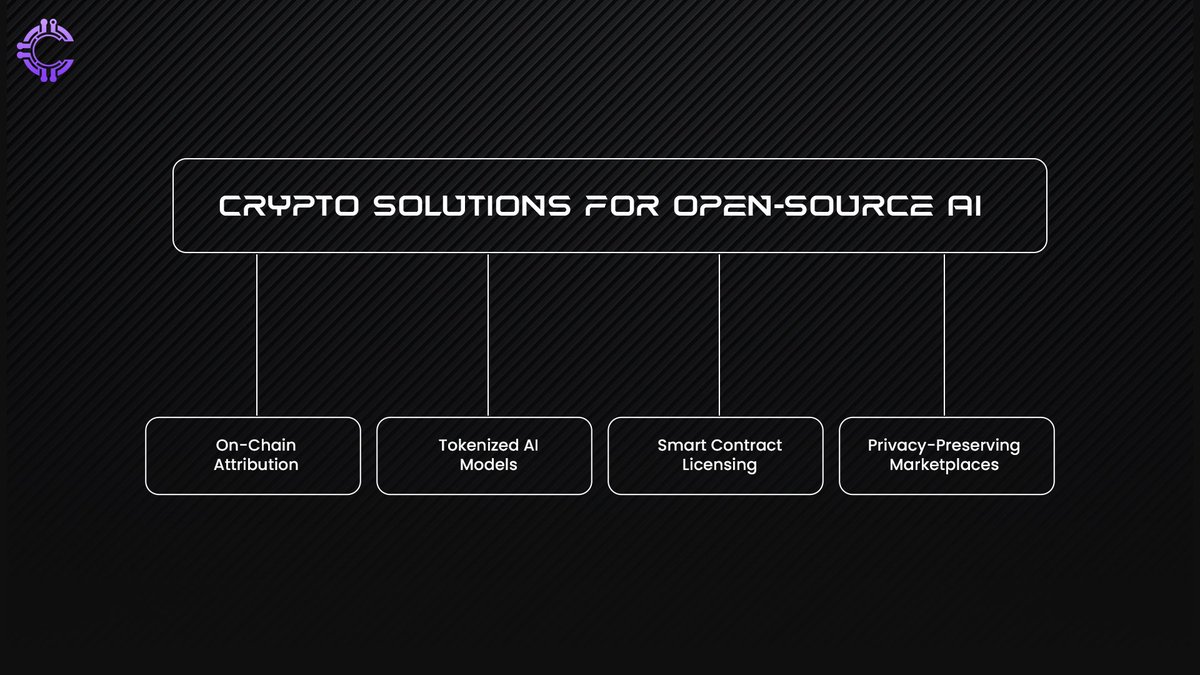
Several emerging mechanisms are attempting to solve the open-source AI monetization crisis at its core:
On-Chain Attribution: Using cryptographic proofs, developers can permanently record their contributions to an AI model, making credit and compensation transparent. This eliminates the issue of corporations profiting from open-source work without acknowledgment.
Tokenized AI Models: By tokenizing AI models, ownership can be fractionalized. Researchers, data contributors, and engineers can earn tokens based on their involvement, giving them a direct stake in the model’s success.
Smart Contract Licensing: Instead of giving models away for free, developers can use smart contracts to enforce usage terms. Companies can access models under predefined conditions, automatically triggering payments when deployed at scale.
Privacy-Preserving AI Marketplaces: Using technologies like zero-knowledge proofs and secure multiparty computation, data owners can contribute to AI training without exposing sensitive information. This enables decentralized, trustless collaboration while maintaining privacy.
Crypto won’t replace open-source AI, it will save it. Without a mechanism for fair monetization, the open-source movement risks stagnation or outright collapse. The models will still exist, but the brightest minds won’t have a reason to keep building them. With crypto, the incentives finally align.
Bagel: Bringing Fair Compensation to Open-Source AI
Open-source AI is powerful but fundamentally broken, developers contribute, corporations profit. Bagel🔗 is fixing this by embedding cryptographic attribution, privacy-preserving collaboration, and decentralized ownership directly into AI development.
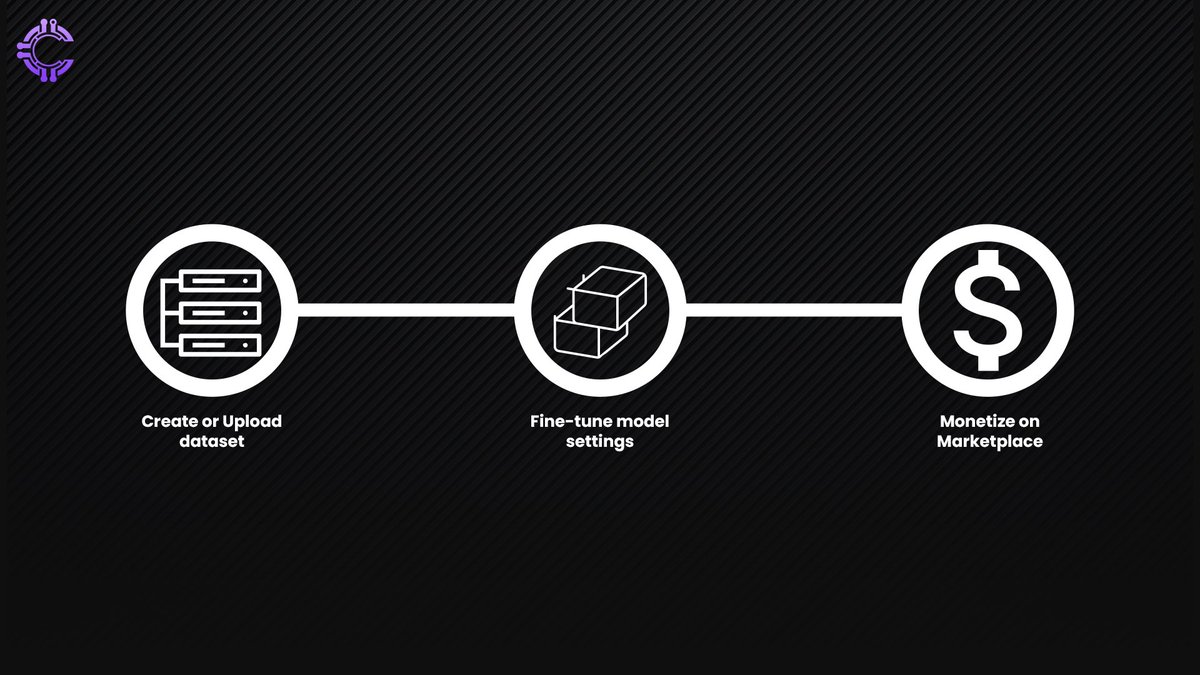
Attribution: Contributions: whether code, data, or fine-tuning, are tracked and credited. When a model improves, contributors automatically receive a fair share of future revenue based on measurable performance gains.
Privacy: @BagelOpenAI enables privacy-preserving machine learning (PPML), allowing data owners to contribute without exposing sensitive information. Cryptographic containers ensure that AI can be trained collaboratively without compromising security.
Ownership: Traditional licensing is replaced with smart contracts, giving contributors perpetual stakes in their work. Payments are automated, ensuring fair compensation without intermediaries.
By aligning incentives, Bagel is turning open-source AI into a sustainable ecosystem. Developers don’t have to rely on donations or goodwill—just the value they create. If it works, open AI might finally compete on equal footing with closed-source giants.
The Missing Pieces in Open-Source AI
Open-source AI is at a crossroads. The momentum is undeniable, but so are the unresolved challenges. Attribution, governance, and regulation all remain open questions, and without clear solutions, sustainability remains elusive.
Take attribution, the backbone of any fair compensation system. How do you determine the value of a dataset that subtly improves a model’s performance? Benchmark-based tracking helps, but it’s far from perfect. Then there’s governance. Decentralized voting sounds good in theory, but in practice, it’s vulnerable to manipulation and often ends up favoring the most well-resourced participants. And regulatory uncertainty looms over everything. Many AI-crypto hybrids operate in legal gray zones, and without clear frameworks, long-term adoption remains risky.
Structuring a Sustainable Open-Source AI Economy
If open-source AI is to scale sustainably, a hybrid approach is needed, balancing openness with economic incentives. This requires several foundational shifts:
Foundation model commons: Base models should remain open, funded by industry consortiums or public grants, much like the Linux Foundation ensures sustainability for open-source software.
Tokenized specialization layers: While base models stay open, domain-specific fine-tuning and application layers can introduce token-based incentives, ensuring contributors are rewarded for their improvements.
Standardized attribution protocols: Clear industry-wide frameworks for tracking contributions, whether through cryptographic signatures, on-chain proof-of-contribution systems, or standardized benchmark improvements.
This model preserves the core benefits of open-source AI while ensuring those who add value aren’t left behind.
Towards a Fairer, More Effective Ecosystem
If open-source AI is to thrive, it needs more than good intentions, it needs infrastructure, incentives, and a shift in mindset. Free and open access will always be essential, but sustainability demands a move beyond the idea that everything should be free. Fair compensation doesn’t have to come at the cost of collaboration. If anything, it could make open-source AI more robust, attracting talent that would otherwise have no choice but to work for closed-source companies.
This isn’t just about economics, it’s about making sure the future of AI is built by those who should be building it. The technology is ready. The question is whether we’re ready to create a system that actually works.
About Cluster Protocol
Cluster Protocol is the co-ordination layer for AI agents, a carnot engine fueling the AI economy making sure the AI developers are monetized for their AI models and users get an unified seamless experience to build that next AI app/ agent within a virtual disposable environment facilitating the creation of modular, self-evolving AI agents.
Cluster Protocol also supports decentralized datasets and collaborative model training environments, which reduce the barriers to AI development and democratize access to computational resources. We believe in the power of templatization to streamline AI development.
Cluster Protocol offers a wide range of pre-built AI templates, allowing users to quickly create and customize AI solutions for their specific needs. Our intuitive infrastructure empowers users to create AI-powered applications without requiring deep technical expertise.
Cluster Protocol provides the necessary infrastructure for creating intelligent agentic workflows that can autonomously perform actions based on predefined rules and real-time data. Additionally, individuals can leverage our platform to automate their daily tasks, saving time and effort.
🌐 Cluster Protocol’s Official Links: