
The Rise of Intent-Driven AI Agents in Crypto: The Real Abstraction
Mar 6, 2025
10 min Read
It starts with a trader, let’s call him Daniel. He wakes up early, checks the markets, and sees an opportunity. A new liquidity pool is offering 20% APY, but only for the next six hours. He quickly opens his wallet, swaps assets, moves liquidity, and confirms the transaction. But the gas fees spike. The network slows. By the time he’s done, the opportunity has shrunk, and his profit margin isn’t what he expected.
Now, imagine an alternative. Instead of scrambling, Daniel simply sets his intent: “Maximize stable yield with minimal risk.” His AI agent scans pools, predicts gas fee fluctuations, and executes the best move in real-time, all before he even finishes his morning coffee. This is the world intent-driven AI agents are building. Not just automation, but autonomy.
The Shift from Execution to Intention
At their core, intent-driven AI agents are not just rule-based bots. They don’t just execute pre-programmed strategies, they understand what users want at a higher level and optimize actions to match. Instead of manually selecting protocols, confirming transactions, and monitoring volatility, users interact with AI on a goal-oriented level.
The agent deciphers intent through natural language or structured commands, translates it into optimal on-chain actions, and executes them autonomously. This is a paradigm shift. Instead of users micromanaging trades, swaps, and liquidity allocations, AI agents abstract those complexities away. The result? A DeFi landscape where interacting with blockchain isn’t about transactions, but outcomes.
Underneath, these agents rely on a mix of reinforcement learning, real-time market data analysis, and predictive modeling. They optimize gas fees, preempt network congestion, and hedge against risks in ways that human traders simply can’t. The more data they process, the better they become at executing financial strategies in DeFi environments that change by the second.
Wallets as Enablers of Autonomy
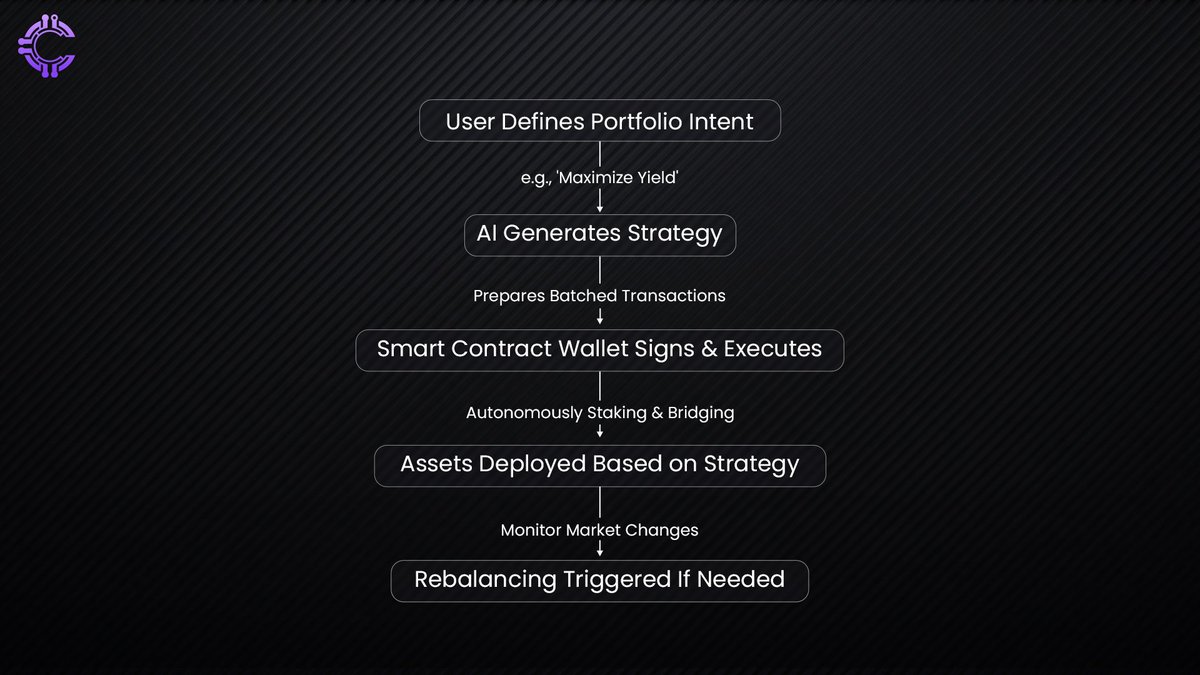
If AI agents are the decision-makers, wallets are their execution layer. They aren’t just passive storage units anymore. In an intent-based ecosystem, wallets transform into autonomous enablers, interfacing with protocols, batching transactions, and ensuring security.
Imagine setting an intent like, “Dynamically allocate funds between lending and yield farming based on market conditions.” The AI agent crafts a strategy, but it’s the wallet that deploys assets, signs transactions, and interacts with smart contracts. The wallet becomes the bridge, executing decisions without constant user oversight.
Smart contract wallets, particularly those leveraging account abstraction (like ERC-4337), are at the core of this transformation. These wallets allow AI agents to execute transactions on behalf of users without manual approvals for every step. With intent-driven AI, the wallet doesn’t just hold assets - it intelligently moves them based on user-defined goals.
This is more than convenience. It’s an evolution in how we engage with blockchain networks. The user sets the vision, the AI refines the strategy, and the wallet makes it happen.
##When AI Meets DeFi##
The integration of AI into DeFi isn’t just about efficiency, it’s about intelligence. Markets don’t move in straight lines, and neither should financial decisions.
At its core, DeFAI is about reducing friction. Liquidity pools shift, interest rates fluctuate, and optimal strategies change within minutes. Instead of users constantly adjusting positions, AI agents absorb real-time data, anticipate shifts, and execute strategies autonomously. The logic is simple: why manually track a dozen DeFi protocols when an agent can handle it faster and with greater precision? The best part? These agents don’t just react, they predict. By analyzing market conditions and historical trends, they fine-tune financial strategies before inefficiencies even appear.
However, this approach comes with its own limitations, as agent accuracy is far from perfect and remains inherently probabilistic.
In practical terms, DeFAI manifests through platforms that utilize AI to optimize trading strategies, manage assets, and predict market trends. For instance, projects like Hey Anon employ AI-driven protocols to simplify user interactions, aggregate real-time data, and execute complex operations via natural language commands. Similarly, Hive offers a modular and interoperable DeFi agent network capable of coordinating intricate on-chain activities, seamlessly integrating various DeFi functions into a unified platform.
##DeFAI: More Than Just Trading##

But trading and yield optimization are only the surface. The real impact of DeFAI comes from how it redefines the structural layers of DeFi itself. In a multi-chain world, where assets move across networks at unpredictable speeds and costs, AI agents provide stability. They route transactions through the most cost-effective paths, manage liquidity between chains, and even hedge against volatility before a user realizes they need it.
Cross-chain Optimization: AI agents monitor liquidity across different blockchains, ensuring the most efficient asset transfers while avoiding congestion and high gas fees.
Automated Risk Management: By assessing smart contract vulnerabilities and market risks in real-time, AI agents proactively adjust strategies to mitigate losses.
Intent-Based Portfolio Management: Users define broad financial goals rather than micromanaging every trade. AI agents execute investment strategies dynamically, reallocating assets based on market conditions.
This shift is subtle but profound. DeFi has always been about disintermediation, but AI introduces a new form of abstraction, one where users no longer need to engage with the complexity of financial engineering. They express an intent, and the system orchestrates the rest.
Griffin AI: A general-purpose platform enabling users to automate DCA, launch tokens, or execute airdrops based on specific criteria. By abstracting processes, Griffin AI reduces technical barriers and brings DeFi to everyone.
DefAI buddy: Built on Cluster Protocol and Trikon, it dynamically resolves any DeFi intent, from staking to yield farming, across EVM, Rust, Move, and Cosmos SDK ecosystems. Its omnichain framework means no more fragmented interactions, users express intent, and DefAI Buddy handles the rest, ensuring seamless execution across all blockchain networks with zero manual intervention.
The result? A financial layer that’s not just decentralized but dynamically intelligent, capable of adapting in real-time to an ever-changing market.
Beyond the Trade: Where AI Agents Quietly Take Over
Intent-driven AI isn’t just about optimizing DeFi strategies, it’s about reducing the cognitive load across the entire blockchain ecosystem. The same agents that rebalance portfolios and optimize gas fees are also quietly handling decisions in ways most users don’t even realize. They scan networks, identify inefficiencies, and execute the best possible actions within predefined parameters. The less users have to micromanage, the more seamless their interactions become.
Think about how fragmented on-chain interactions still are. Swapping assets, managing permissions, verifying ownership, it all demands a level of manual oversight that doesn’t scale. But an AI agent with access to a wallet, an execution layer, and real-time intelligence doesn’t see tasks as isolated events. It views them as interconnected decisions, each influencing the next. The result? Fewer roadblocks, smarter execution, and an experience that feels fluid rather than reactive.
Automated Compliance & Security: AI agents can monitor transactions, flag suspicious activity, and enforce predefined security policies without user intervention.
On-Chain Reputation & Identity: Instead of relying on static credentials, AI agents can dynamically assess trust scores, manage decentralized identities, and facilitate seamless interactions between parties.
Seamless Governance & Voting: Rather than users manually tracking DAO proposals, AI agents can analyze governance votes, summarize key points, and execute on behalf of the user’s best interests.
It’s about systems that make blockchain interactions as effortless as opening a browser tab. The best AI agents won’t ask for attention. They’ll just work.
AI + Intent + Natural Language = 100% usability
The biggest barrier to crypto adoption isn’t technology, it’s usability. DeFi is powerful but remains inaccessible to those who don’t speak the language of liquidity pools, gas fees, and smart contracts. Intent-driven AI is changing that equation, making trading as simple as stating a goal.
HeyElsaAI is pushing this shift forward by turning natural language into actionable trades. Instead of navigating complex interfaces, users can express intent “buy ETH when the market stabilizes” or “optimize my portfolio for risk-adjusted yield” and the AI handles execution. No manual order placement, no guesswork, just real-time decision-making powered by AI-driven precision.
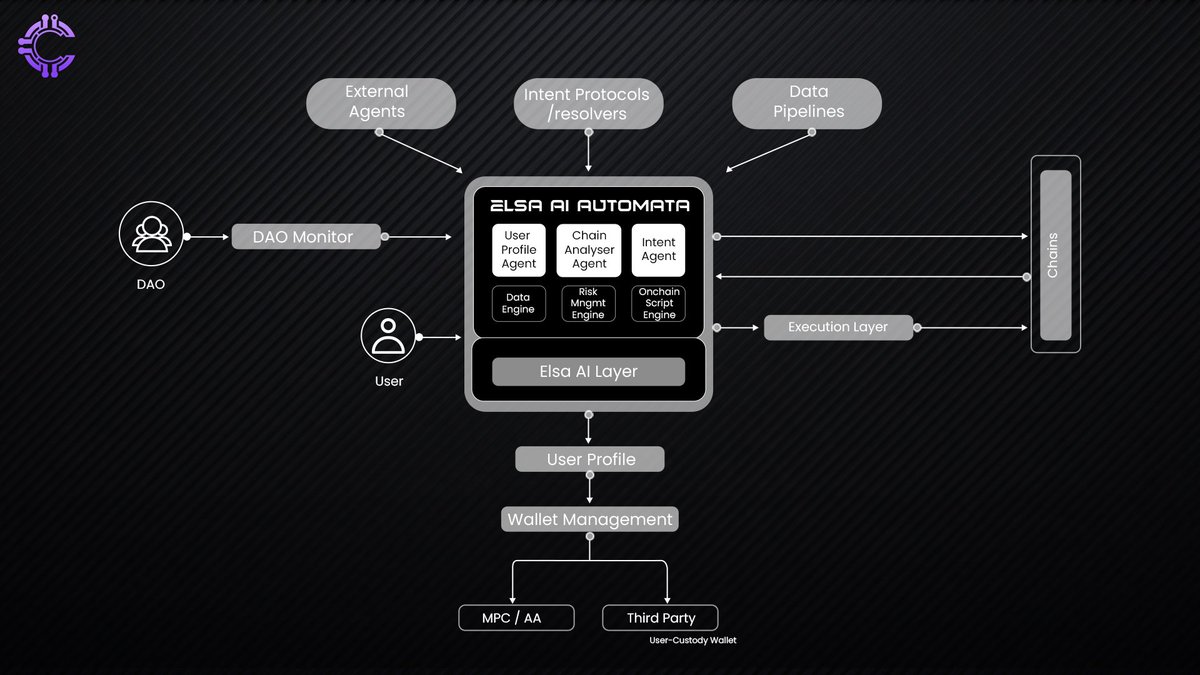
This is where DeFi is headed. The user no longer needs to think in execution steps; they think in outcomes. AI translates those outcomes into real, verifiable on-chain actions. The future isn’t just automated—it’s intuitive, allowing users to trade, invest, and optimize without ever touching a manual order book.
The Silent Risks of AI Autonomy
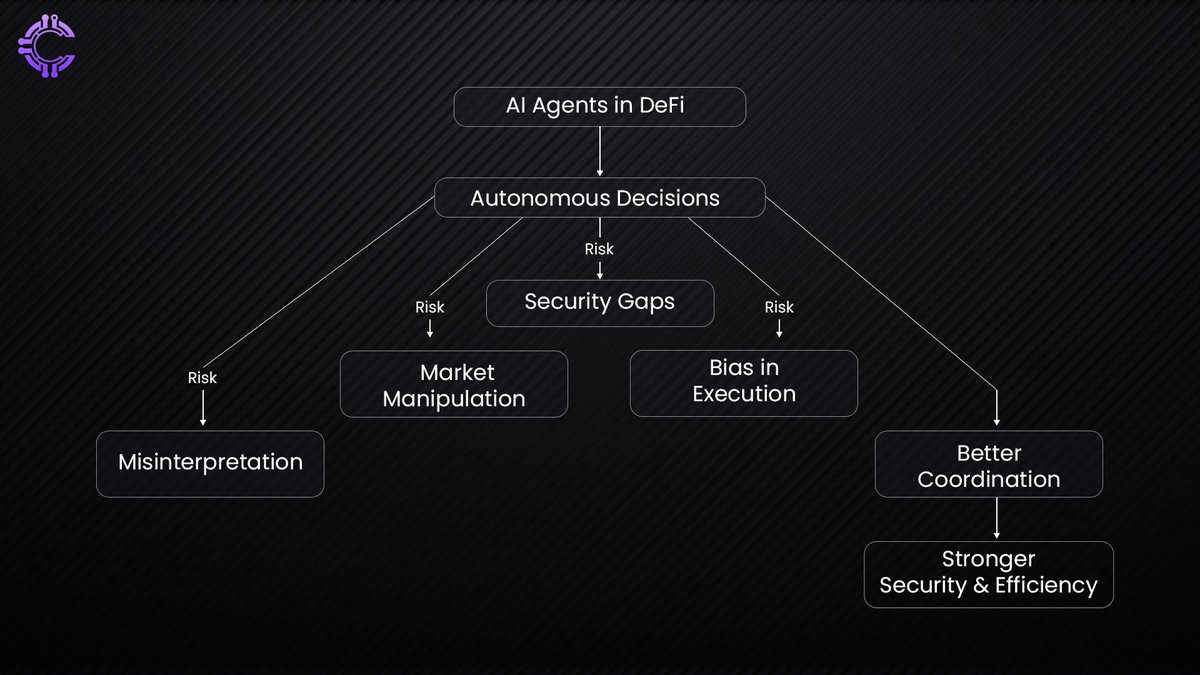
The rise of intent-driven AI agents in crypto isn’t just about efficiency, it’s about control. As these systems handle financial assets, route transactions, and execute trades, they shift from being tools to autonomous actors. But autonomy introduces risk. Who holds accountability when an AI agent misinterprets intent? What happens when an agent optimizes for profit at the cost of ethical considerations?
Transparency isn’t just a buzzword here, it’s a structural necessity. AI agents operating on-chain make decisions based on code, but that code is often opaque, influenced by biases in training data, and subject to unexpected outcomes. A lending algorithm might optimize for yield but inadvertently exclude certain users based on patterns in historical data. A trading bot might exploit inefficiencies in a way that borders on market manipulation. The challenge isn’t just in preventing bad actors from exploiting AI, it’s ensuring the AI itself doesn’t become the bad actor.
Security in a Network of Autonomous Agents
The comparison to self-driving cars is fitting. Early models operated as independent systems, making decisions based on their immediate surroundings. But as networks evolved, the vision shifted to connected fleets, cars sharing data to optimize traffic flow, reduce congestion, and enhance safety. Intent-driven AI agents in DeFi are following the same trajectory.
Initially, each agent operates independently, executing user intents in isolation. But in a fully realized ecosystem, these agents don’t just react to individual inputs, they coordinate, balancing liquidity across networks, preventing system-wide inefficiencies, and even reinforcing security measures against collective threats.
A single AI agent securing a wallet is one thing. A network of agents monitoring for anomalies across thousands of transactions is another.
A trading bot acting alone might be predictable. A swarm of interconnected AI agents optimizing market conditions introduces an entirely new dynamic.
Security isn’t just about encryption and cold storage anymore, it’s about designing networks where autonomous actors work together rather than against each other.
The mistake is in assuming AI agents simply replace human actions. That’s like imagining self-driving cars as just smarter human drivers. The real shift comes when AI agents operate at a level humans never could, collaborating, adapting, and optimizing beyond individual decision-making.
Proof Over Trust: AI Agents and the End of Black-Box Decisions
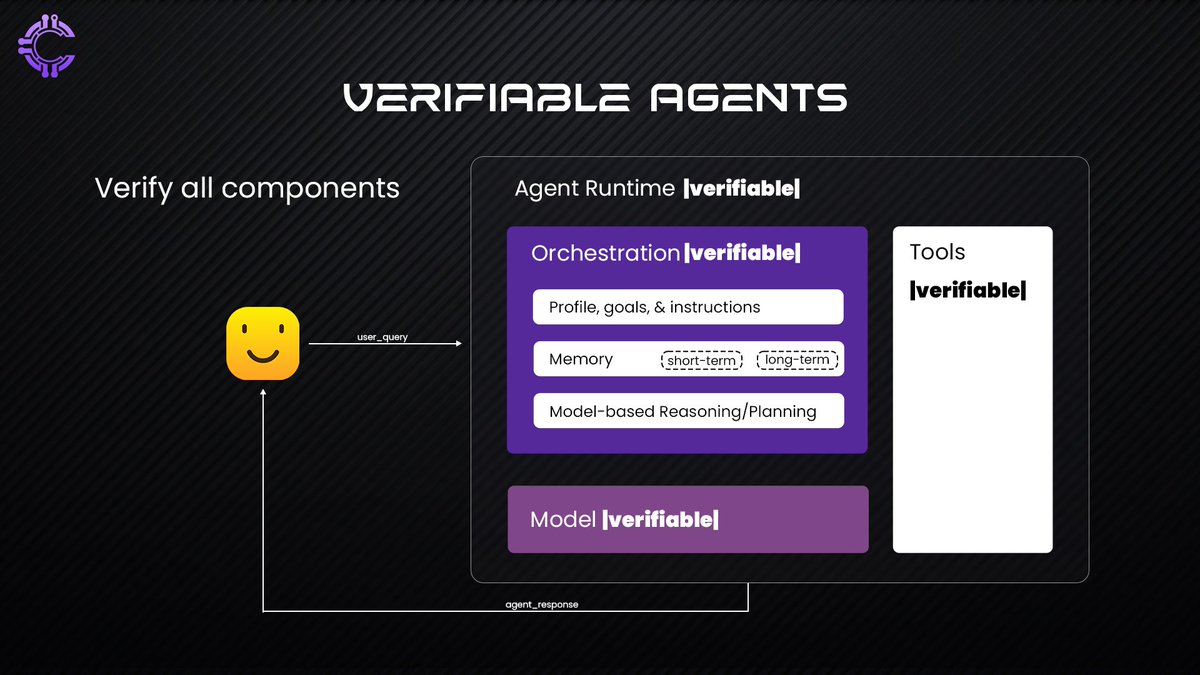
AI agents are becoming the backbone of automated decision-making, but there’s an inherent flaw, most operate in complete opacity. A compliance agent might approve a smart contract, but how do you know it didn’t miss a loophole? A risk analysis model might flag a transaction as suspicious, but what if its reasoning is flawed? Today, users have no choice but to take AI outputs at face value, and when mistakes happen, the liability is theirs alone.
That’s where verifiability changes the game. On-chain AI agents don’t just make decisions, they prove them. Instead of blindly trusting a compliance check or a contract audit, users can demand cryptographic proof that every step adhered to predefined legal and financial rules. Zero-knowledge proofs (ZKPs) make this possible, allowing AI agents to generate mathematical guarantees that their assessments were executed correctly, without revealing sensitive data. No black boxes, no silent failures, just provable, trustless execution.
But AI computation is heavy, and blockchains aren’t built to handle it directly. The solution? AI models process data off-chain, while on-chain ZKPs serve as the trust layer, ensuring every AI-driven action remains verifiable. The result isn’t just automation, it’s accountability, woven directly into the fabric of decentralized intelligence.
The Inevitable Shift: AI as the New Financial Primitive
Intent-driven AI agents aren’t just optimizing DeFi, they are redefining the fundamental relationship between users and blockchain networks. What began as a shift from manual execution to automation is evolving into a full-scale re-architecture of financial autonomy. AI isn’t just replacing human actions; it’s introducing an entirely new way to interact with decentralized systems, where intent replaces execution and strategy replaces transactions.
But autonomy without accountability is chaos. The true potential of these agents lies in their ability to provide verifiable, transparent, and intelligent financial decision-making. With advancements in zero-knowledge proofs, multi-agent coordination, and cross-chain liquidity optimization, AI is no longer just an efficiency tool, it’s becoming a core building block of decentralized finance.
The next phase isn’t about asking whether AI belongs in crypto. That question has already been answered. The real challenge is ensuring that these agents act in the best interests of users, not just algorithms. The moment intent becomes fully executable, blockchain stops being infrastructure and starts becoming an extension of thought. And that’s where the future begins.
About Cluster Protocol
Cluster Protocol is the co-ordination layer for AI agents, a carnot engine fueling the AI economy making sure the AI developers are monetized for their AI models and users get an unified seamless experience to build that next AI app/ agent within a virtual disposable environment facilitating the creation of modular, self-evolving AI agents.
Cluster Protocol also supports decentralized datasets and collaborative model training environments, which reduce the barriers to AI development and democratize access to computational resources. We believe in the power of templatization to streamline AI development.
Cluster Protocol offers a wide range of pre-built AI templates, allowing users to quickly create and customize AI solutions for their specific needs. Our intuitive infrastructure empowers users to create AI-powered applications without requiring deep technical expertise.
Cluster Protocol provides the necessary infrastructure for creating intelligent agentic workflows that can autonomously perform actions based on predefined rules and real-time data. Additionally, individuals can leverage our platform to automate their daily tasks, saving time and effort.
🌐 Cluster Protocol’s Official Links: